When I spoke with Love Story Executive Producers Brad Simpson and Nina Jacobson of Color Force, I intended to include a section about the transporative nature of the music in our initial article.
But then they had to go and be so generous and detailed about the musical choices made for the series that I had to reconsider.
There is nothing worse than spoiling a moment, and the music in Love Story is its own moment. Every song transports us to a different place and time, as much as the scenes themselves.
So this is our final deep dive with the duo, and thus my final thank you to them for their generosity and incredible spirit, which is as deeply ingrained in the series as anything else.
The music of Love Story takes us right into a specific place in time. Every song is so perfectly chosen for the scenes it plays with. How involved were you in shaping the musical identity? And how different does it feel for you once you see the music superimposed on those scenes?
Brad Simpson: We were very involved. We brought in Jen Malone to do the music supervision for this. If you look at her credits, you see she’s done Euphoria, Atlanta, and other things.
And she’s known for taking unconventional choices and putting them in shows. But she herself is also a ’90s alt-rock girl who, like, this was her period. This was her jam.
And she made us a big early Spotify playlist. And we decided not to necessarily go with the Top 10 hits of every year. You know, I think that there are songs that everyone recognizes, but some of them are a little bit like the left-of-center hits.
We wanted to have Primal Scream; you know, it was Radiohead before Radiohead was good and had fully exploded. We wanted to have Björk. You know, we wanted to have a little bit of that ’90s alt-sensibility.
We mainly use songs from the period, except for using the Velvet Underground in episode six. And that’s what we wanted to do. We also wanted the songs to have come out in the years they were released.
So it was very specific, like Pulp’s “Common People.” And some of those were written into the script. So, for example, in episode six, Common People was written into the script, and we couldn’t clear it at first.
And it was, you know, the scene that we built around it.
Writer Julie Weiner and showrunner Connor Hines built this whole scene around the two of them dancing to Common People and using it as a sort of commentary on John. And Jim Malone wrote Jarvis an impassioned letter, and it cleared. And so everything was specific.
Nina and I actually don’t get to see the cuts without the music, but by the time they come to us, they’ve got needle drops in because it was all coming off a preordained Spotify playlist. Sometimes we would move them around.
I mean, the one song that’s not there that we decided not to use is at the end of Love Story Season 1 Episode 8, which is the big fight episode.
Originally, that included Sinead O’Connor’s “Nothing Compares to You.” And Ryan finally made the decision that the scene was so powerful to end it just in silence as he left the loft.
And that was a song we kept trying to put in. It was, at one point, in different parts of the show. It’s the ultimate ’90s love song, but we just couldn’t figure out where to use it.
And then Bryce Drexner, who did our score, is from a band called The National. And we wanted a score that also felt like every time you hear that score, you’re going to feel like, oh my God, John and Carolyn. John and Carolyn.
Yes. And I think that would have been problematic with Nothing Compares to You because it is used elsewhere. Everything that you’re using here feels so perfect for the moment, but it’s not something, like you said, that you hear everywhere else.
Nina Jacobson: Those are great, deeper cuts that I think, you know, that they are… They take you right back to the time and the way that, like, there are certain smells that bring you back.
Like, right away, you’re like, oh my God, I remember the smell of walking into that restaurant or my mother’s kitchen or whatever it is.
Some of these songs are just that, like, instant transport to that time. And it’s very pleasing for those of us who were living through that time. And, you know, because they really do have like a powerful, like, get in your bloodstream, you know, sense memory.
It’s funny because I actually wrote that in my notes about smell. I said, you know, smells take you back, but you can’t put smells on TV. What you can do is use music.
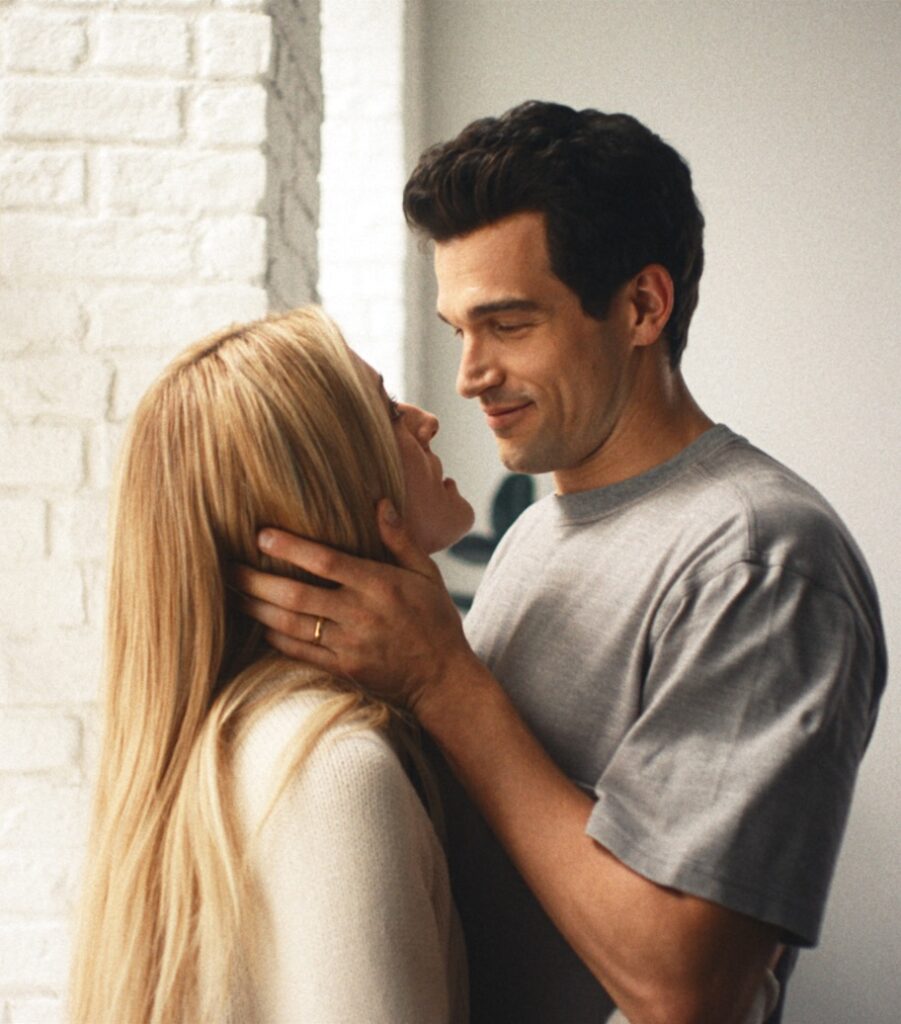
And using the same song over and over again doesn’t get the point across. But those of us who were alive in the ’90s or in the ’80s and the ’70s, and we know specific songs, not just what people want the ’90s to be, but what they actually were.
I think that you’re going to see a lot of these songs climbing to the top of the charts again and seeing, you know, people exploring artists that they didn’t even know existed.
BS: I hope so. That she did it. And the one thing that we kept, we had to restrain ourselves.
We have two Radiohead songs because Radiohead always worked. We can’t use Radiohead too many times, but Radiohead worked on almost every scene because that sound and his wail, especially in later episodes, is the wail of somebody who’s in love and feeling the pain of being in love.
Has the music in Love Story turned you on to any new artists? Could you imagine the series without it? Let us know in the comments below.
The Love Story Season 1 finale airs on FX on Thursday, March 26 at 9/8c.