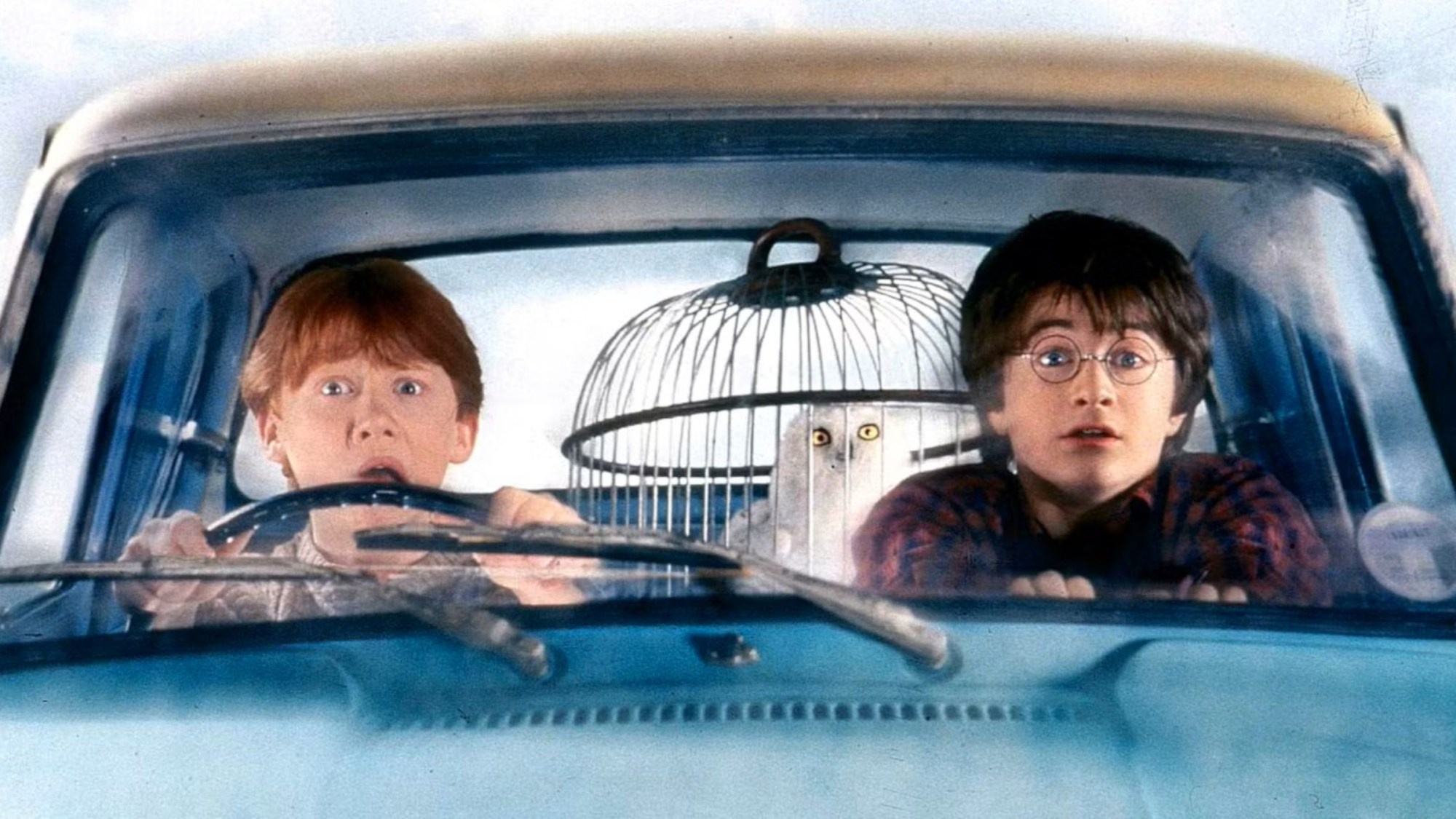
Few franchises have embedded themselves into the cultural DNA of multiple generations the way Harry Potter has. J.K. Rowling’s seven-novel series redefined what children’s literature could accomplish, pulling readers of every age into a mythology that proved both emotionally resonant and commercially indestructible. Parallel to that, the eight-film adaptation, which ran from 2001 to 2011, cemented that legacy in a different medium entirely, launching Daniel Radcliffe, Emma Watson, and Rupert Grint into global stardom. Now, with HBO set to debut a new live-action series adapting each book into its own season with Harry Potter (Dominic McLaughlin) and Albus Dumbledore (John Lithgow) at its center, the Wizarding World is preparing its most ambitious chapter yet. The renewed scrutiny that accompanies any major revival, however, tends to surface a franchise’s more persistent structural weaknesses, and Harry Potter has several glaring ones.
Harry Potter and the Philosopher’s Stone and Harry Potter and the Chamber of Secrets treat days and dates with the casualness of a rough draft that never received a second pass. For instance, Dudley Dursley’s birthday trip to the zoo is placed on a Saturday in Philosopher’s Stone, but June 23, 1991, was a Sunday, while Harry’s own birthday on July 31st is identified as a Tuesday when the actual date that year fell on a Wednesday. Prisoner of Azkaban escalates that issue by introducing time-travel, and, with it, a renewed focus on dates. Among the weirdest assynchonicities is Buckbeak’s hearing, which is firmly identified as taking place on April 20th in an early chapter, yet, when traced carefully through the narrative, can unfold no later than February. Rowling course-corrected with Goblet of Fire, producing a fourth installment whose internal timeline is almost clinical by comparison, though in doing so, she introduced a different kind of error entirely.
The Goblet of Fire‘s Calendar Doesn’t Match the Real World
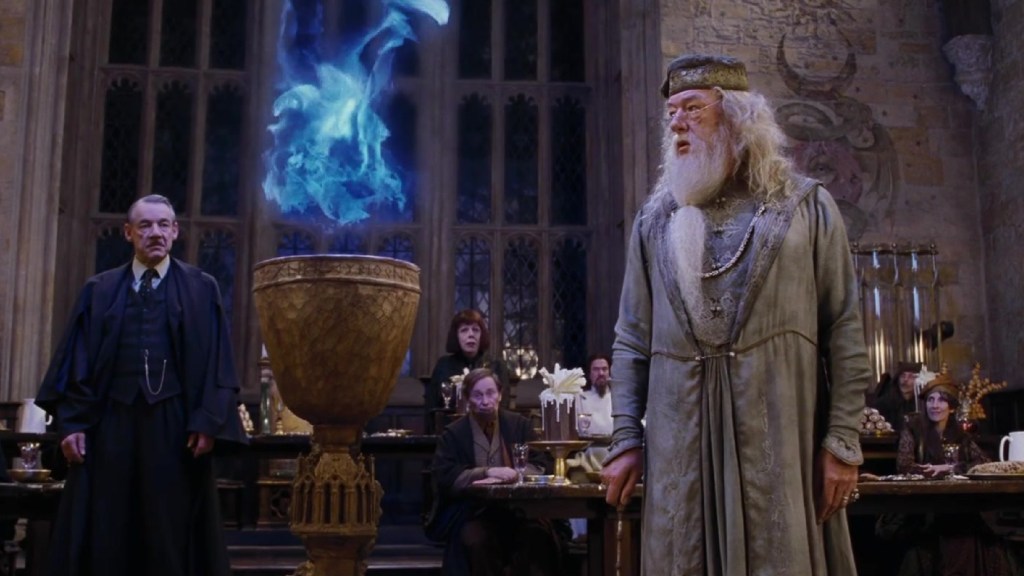
Harry Potter and the Goblet of Fire unfolds during Harry’s fourth year at Hogwarts, placing the academic calendar firmly in 1994-1995. Curiously, the book presents a methodological shift from its predecessors, with class schedules remaining consistent from chapter to chapter and the spacing between major events holding up. The Harry Potter Lexicon, which has mapped the day-by-day calendars of each novel in exhaustive detail, confirms that Rowling built a coherent internal schedule for the fourth book, with the vast majority of dates and days described as consistent with one another across the narrative.
However, comparing the novel’s dates with a real-world calendar of the years 1994 and 1995 unveils a weird discrepancy. Every date that Goblet of Fire explicitly assigns to a day of the week lands exactly two days off when compared against the actual 1994-1995 calendar. As an example, Halloween falls on a Saturday in the novel, but in 1994 it was a Monday. The same two-day gap holds consistently across the book’s timeline, which rules out a random collection of isolated errors and points instead to Rowling using the wrong calendar year in her research.

The most compelling explanation for this pattern was put forward by Dakota Lopez on X, who observed that Goblet of Fire‘s dates do not correspond to 1994-1995 but align precisely with 1998-1999. Lopez’s theory is that Rowling, having committed to using a physical calendar to structure the book’s timeline, used the calendar year available to her at the time of writing, which was 1998, the same year Chamber of Secrets was published in the United Kingdom and Philosopher’s Stone reached American readers. Therefore, the two-day discrepancy is the fingerprint of a very specific organizational tool being applied thoughtfully, but to the wrong year.
The theory is structurally sound. A writer who had just delivered the chronological wreckage of Prisoner of Azkaban, a time-travel narrative whose own mechanics resist internal scrutiny, would have had a strong motivation to anchor the next installment to something concrete. Lopez argues that access to a fixed calendar made managing the book’s substantially larger number of interlocking plot threads far more practical than it would have been otherwise, and the results support that claim. Goblet of Fire is longer, denser, and more structurally ambitious than anything that preceded it in the series. It’s still funny, though, that in her efforts to improve the timeline of the books, Rowling might have forgotten to check if the calendar she was using was the right one.
HBO’s Harry Potter, Season 1: Harry Potter and the Philosopher’s Stone premieres December 25, 2026, on HBO and HBO Max.
Do the Harry Potter books’ chronological messiness detract from your enjoyment of the books, or is it a forgivable flaw given the scope of what Rowling built? Leave a comment below and join the conversation now in the ComicBook Forum!