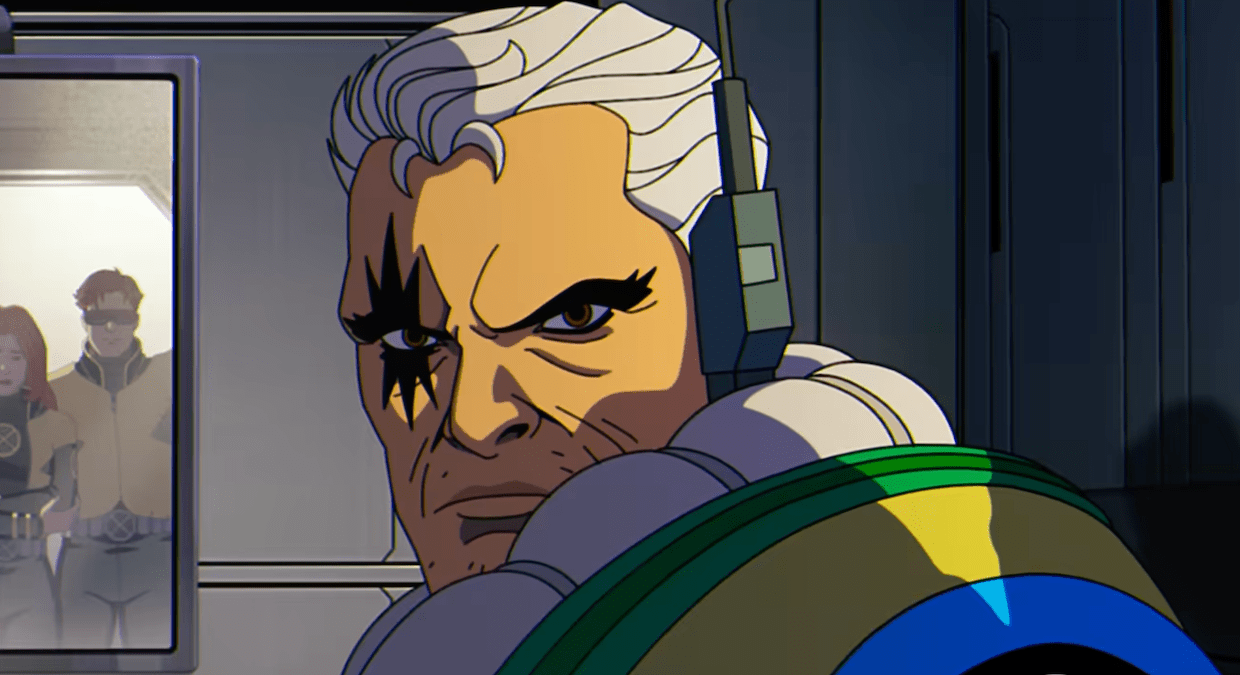
However, in the comics, Cable cannot be separated from either X-Force or its predecessor, the New Mutants. Introduced in the 1982 graphic novel The New Mutants by Claremont and Bob McLeod, the New Mutants were the second class of gifted youngsters who came to study at Xavier’s school. Most of their series focused on teenage adventures, as people like Cannonball or Sunspot balanced developing their powers with navigating crushes, going to parties, and more run-of-the-mill body changes.
Everything changed when Cable arrived in 1990’s New Mutants #87. Well, things had already started to change, when the popularity of up-and-coming hot artist Rob Liefeld allowed him to wrest creative control from longtime writer Louise Simonson, who left the book a few issues later. Under Liefeld’s guidance and Cable’s leadership, the New Mutants became more militaristic, a violent strike force that would attack problems before they began. In June of 1991, New Mutants was canceled and X-Force #1 hit shelves.
X-Force was a huge hit, filled with big narrative swings and over-the-top characters. Liefeld filled the ranks with characters with gigantic weaponry, illogical sartorial choices, and (it must be said) tiny little feet. He sacrificed anatomy, sound composition, and basic storytelling chops for the most extreme choices imaginable. Nothing illustrates this more than 1991’s X-Force #4, a crossover with Spider-Man that pit the team against the Juggernaut and was in landscape form, requiring the reader to hold the comic on its side, but offering widescreen action.
Even after Liefeld left the book, giving co-writer Fabian Nicieza more room to craft coherent narratives, X-Force remained incredibly silly and incredibly popular, a point not lost on those who loved its sister book, X-Factor.
X-Aminations
Like X-Force, X-Factor—or at least the version discussed here—has its roots in the ’80s. 1985’s X-Factor #1, by Bob Layton and Jackson Guice, reunited the original five X-Men: Cyclops, Beast, Angel, Iceman, and a recently-resurrected Jean Grey. After a bumpy beginning, the book found its footing when Simonson came aboard, and enjoyed a well-admired six-year run.
But in 1991, Marvel introduced an entirely new team in X-Factor #71, written by Peter David and penciled by Larry Stroman. This new X-Factor was an extension of the American government, designed to repair relations between the U.S. and its mutant population. The lineup consisted entirely of B-listers. It was led by Cyclops’ well-meaning but empty-headed little brother, Havok, who took the job to reunite with former finance Polaris, who was still regaining her sense of self after several years of possession by the evil mutant Malice. Joining them was Wolfsbane, the shy Catholic Scottish member of the New Mutants who wanted more adult experiences (in every sense of the word) with X-Factor; the arrogant speedster Quicksilver; Jamie Madrox the Multiple Man, a wisecracking scientist who could make endless duplicates of himself; and hulking bodyguard Guido Carosella, who refused to take a superhero codename until someone observed that he was the strong guy, and referred to himself as Strong Guy ever since.