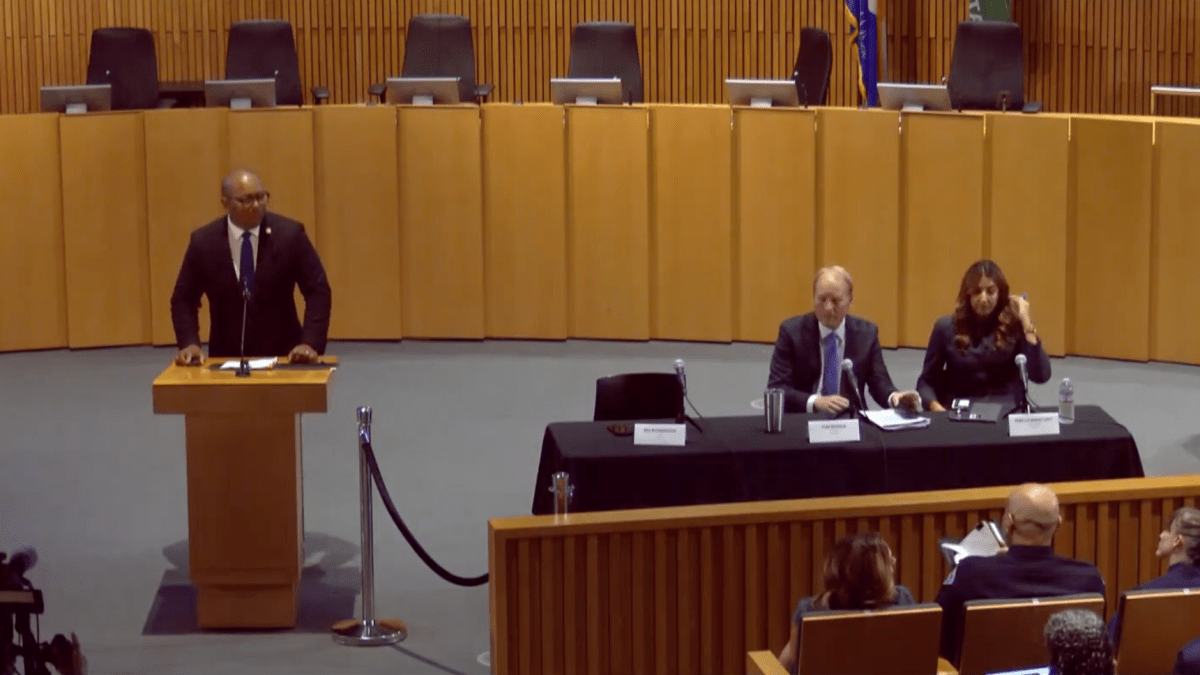
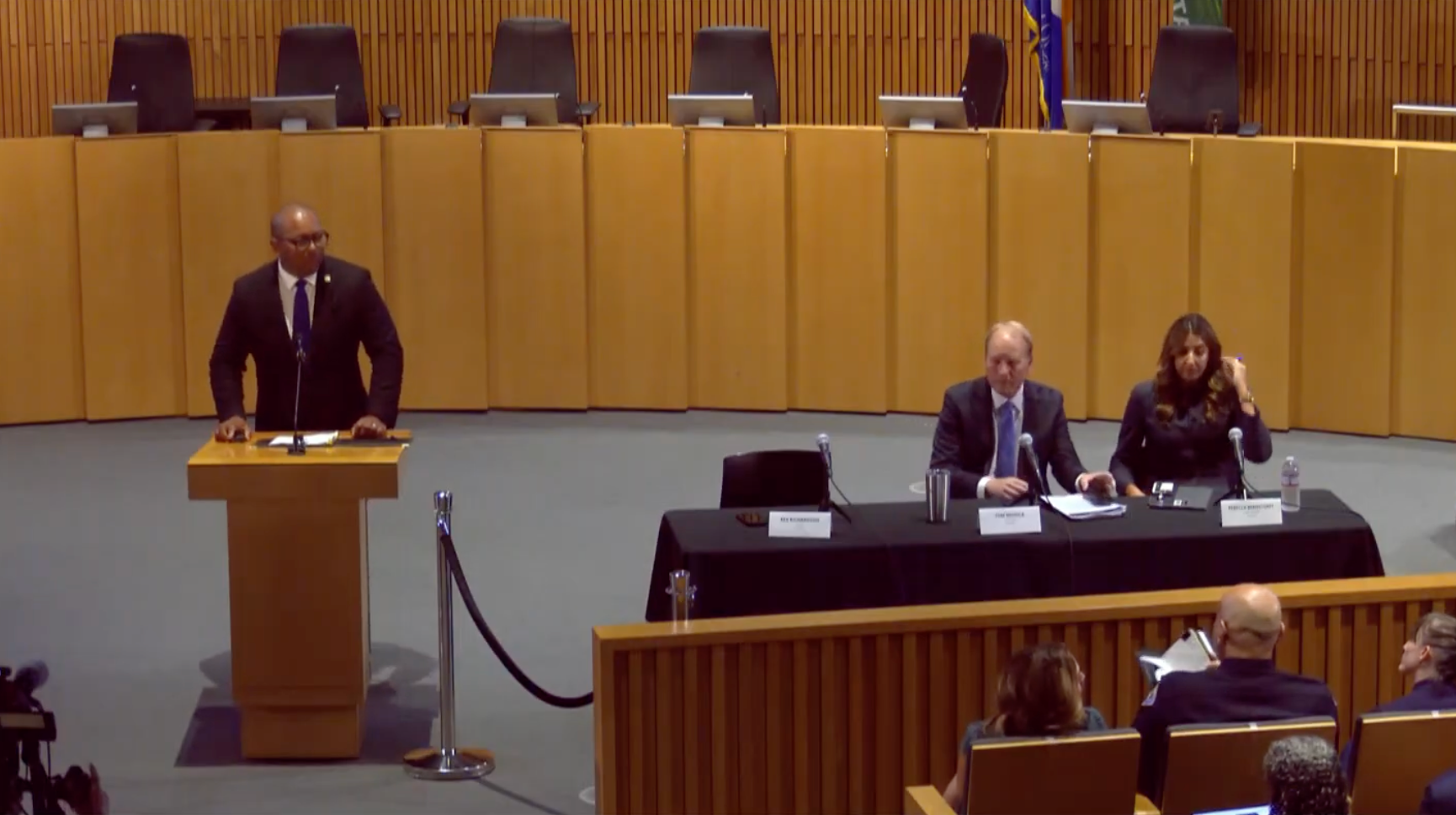
Long Beach Mayor Rex Richardson and City Manager Tom Modica unveiled a proposed fiscal year 2027 budget that would eliminate a net 413 city positions, with city officials estimating about 180 occupied employees could ultimately lose their jobs if the spending plan is approved.
The proposal is designed to close a projected $58.2 million structural deficit in the city’s General Fund through workforce reductions, service cuts and other ongoing savings.
Although Richardson restored 70 positions that had been slated for elimination in Modica’s original proposal, hundreds of positions would still disappear across nearly every city department.
| Department | Net positions eliminated |
| Parks, Recreation & Marine | 142 |
| Police | 72 |
| Health & Human Services | 66 |
| Public Works | 43 |
| Technology & Innovation | 24 |
| Fire | 21 |
| Library, Arts & Culture | 14 |
| Financial Management | 13 |
| Community Development | 9 |
| Human Resources | 3 |
| Disaster Preparedness & Emergency Communications | 2 |
| Economic Development & Opportunity | 2 |
| City Clerk | 1 |
| City Auditor | 1 |
| City Manager | 0 |
Although the proposal eliminates 413 positions, that figure includes both filled and vacant jobs. City officials said they expect that about 180 occupied employees could ultimately lose their jobs after accounting for vacancies, transfers and other personnel actions intended to minimize layoffs.
Parks, police and health departments face the largest cuts
The largest workforce reductions would occur in Parks, Recreation and Marine, which would lose a net 142 positions after the mayor’s restorations. The police department would lose 72 positions, followed by Health and Human Services with 66, Public Works with 43, Technology and Innovation with 24, and the fire department with 21.
Several smaller departments would also see staffing reductions, although the mayor restored enough positions to eliminate proposed cuts in the city manager’s office.
Quality of Life Unit partially restored
Among Richardson’s recommendations was a partial restoration of the police department’s Quality of Life Unit, which works alongside homeless outreach teams while addressing neighborhood quality-of-life issues.
The city manager’s original proposal would have reduced the unit from eight officers to two. Richardson recommended restoring two positions, leaving four officers assigned to the unit.
“Quality of Life provides, like, neighborhood problem-solving, some level of support as the outreach workers do their jobs. And so we’re restoring it back to — back to four,” Richardson said.
The mayor reaffirmed homelessness would remain a city priority despite the reductions.
“We’re finding ways locally to continue to do the outreach and support important programs like Quality of Life.”
Homeless-response programs also reduced
While the mayor restored several housing initiatives through outside funding, the proposal would still reduce a number of homeless-response programs.
Among the proposed reductions are scaling back weekend homeless outreach except during emergencies, reducing the Mobile Access Center from two vehicles to one, decreasing homelessness-prevention services, reducing emergency hotel voucher funding and eliminating several homelessness-services positions.
Richardson’s recommendations restore funding for rental assistance, housing navigation and other housing stability programs using non-General Fund revenue.
Fire department still faces deep staffing cuts
The proposed budget would eliminate a net 21 fire department positions after Richardson restored 12 positions, including funding to keep one rotating engine company in service.
| Item | Original proposal | Mayor restores | Final proposal |
| Positions eliminated | 33 | 12 | 21 |
| Rotating engine company | Eliminated | Restored | Retained |
| Colorado Lagoon engine | Eliminated | 0 | Eliminated |
| Rotating engine closures | Continue | — | Continue |
The proposal would still eliminate one fire engine serving the Colorado Lagoon area while continuing rotating closures among six engine companies — a cost-saving measure that has drawn criticism from firefighters and some residents.
Recreation and library services affected
Residents would also see reductions to city services.
The proposal scales back portions of the Be S.A.F.E. summer program, youth programming at Cesar Chavez Park and activities at the Homeland Cultural Center.
Library branches would return to a five-day operating schedule, while Library, Arts and Culture would lose a net 14 positions.
Why city leaders say the cuts are necessary
City officials say the reductions are intended to do more than balance next year’s budget. They say the plan is designed to eliminate Long Beach’s recurring structural deficit and begin rebuilding reserves that were depleted in recent years.
“Our five-year forecast shows the structural deficit contained over the next two fiscal years,” Richardson said. “If revenues and expenditures remain consistent with these projections, the new Measure A revenue approved by Long Beach voters is expected to solve the remaining shortfall.”
Richardson said the plan would position the city to achieve “its first significant and sustained structural surplus in more than a decade” by 2028.
Modica said balancing this year’s budget is only part of the challenge because the city relied on reserves to weather recent financial pressures.
“We’re solving this year’s deficit, but in the last few years, we had to rely on some reserves … they need to be replenished,” Modica said.
To begin rebuilding those reserves, Modica proposed putting nearly $10 million back into the city’s emergency reserve this year, with additional contributions planned in future budgets.
“This is the first step. We’re going to be doing that over the next several years to build up our emergency reserve and then also rebuild our operating reserve,” Modica said.
He urged the city council to continue prioritizing reserve funding even as departments seek additional spending in future years, saying restoring the city’s financial cushion will require sustained discipline.
What happens next?
The proposed budget now moves to the city council for a series of public budget hearings.
Council members may approve, reject or amend the proposal before adopting a final spending plan for the fiscal year beginning Oct. 1, 2026.