
While it’s been a known feature in romance novels for well over a decade, why choose romance has grown in massive numbers in both independent and traditional publishing over the past few years.
Why choose often offers a fix-it for one of our biggest frustrations with love triangles (or squares, or pentagons, or…): why not both? Or all, as it were. In response, we have this growing selection of romance novels in which the protagonist (often women, but not always) is pursued by several potential love interests (usually men, but we’ve been seeing a nice combination of genders recently), and ends up in a joint-HEA with several partners.
Many of the more popular why choose romance novels on the market average two or three love interests, but I’ve seen as many as twelve. (Which…how?) Some stories lean heavily into the sex, while others use it as a conduit to deeper feelings. And of course, some don’t have sex at all. But they all reach the same conclusion: in cases of romantic love, there is no reason a person open to it should have to choose between their love interests, as long as everyone is on the same page.
This is essentially the core philosophy of polyamory, which is a part of the ethical nonmonogamy umbrella. In real life, polyamory often looks a lot less like a why choose romance and more like a word association chart, or a molecule drawing. While group sex can certainly be involved, most polycules involve more lines than shapes, and more people than not will not share romantic feelings. (People who share a partner but are not in a relationship themselves are called metamours.) We’ve seen more and more big ticket why choose romances approach the topic of polyamory, but due to the nature of romance novels, we don’t often see other kinds of polyamory and ethical nonmonogamy presented in romance.
Why choose romance and polyamory intersect very nicely sometimes, but other times, the author brushes over the real-life elements of a polyamorous lifestyle, leaving out some of the more practical day-to-day logistics. And some authors don’t really link the two concepts at all.
There are authors writing romances more akin to real-life polyamorous practices, but other times, they’re just looking for ways to let one woman bang ten adopted brothers, and honestly, I love that for them.
So, let’s look at some romances that have been doing some really interesting things with polyamory, whether or not they fall under the why choose banner.
Kissing Books
Sign up for Kissing Books to receive news, book recommendations, and more for residents of Romancelandia.

Pucking Around by Emily Rath
If Emily Rath has no fans, I am dead. Here, we’ve got Rachel, a new doctor on staff for an expansion NHL team, and three guys she works with: the golden retriever player she had a one-night stand with before she got the job; his grumpyish best friend, who is an equipment manager for the team; and the quiet, intense goalie who pulls her into a superstitious ritual.
In real life, this would be a complete and utter HR and ethics board nightmare, but I managed to shut up my brain and just go with the flow.
While the outcome leans much more Why Choose Fantasy than real-life polyam, the group invokes the concept in conversation and practice. It’s a long-ass book, but it’s that way for a reason: Rachel builds deep, romantic relationships with all three men, and two of them are also working on their own. To offer up enough space for these relationships to breathe, we need a lot of pages, and Emily did us a favor by wrapping everything up in one story instead of making us wait, like some cliffhanger darlings I know.
If you want another amazing romance with a similar dynamic, check out Just Right by Shon.

Behind These Doors by Jude Lucens
This is the first book I remember picking up and thinking: this is it! This is the one I’ve been waiting for! When we start, we meet Aubrey, a high society gentleman who is currently in a relationship with his childhood best friends, a married couple, that leans romantic some days and more sexual others. When Aubrey develops a crush on a young journalist, the Herendales tease him mercilessly and encourage him to pursue the man. So, while Aubrey’s relationship with the Herendales is part of this story, the central courtship involved is between him and Lucian, the journalist. There are other instances of ethical non-monogamy in the book, and you should definitely see about finding Lucens’ prequel story, Gutter Roses, which centers on sex workers.

The Life Revamp by Kris Ripper
This book is actually the opposite of a why choose novel: we have one couple at the center, and the main conflict is actually about the fact that there is a vee in the first place. When Mason meets Diego, he is all in. ALL IN. He would love to pursue a relationship with him, but there’s one problem: Mason wants nothing more than to be married, with a partner and a traditional life. But Diego is already married, in an open relationship that allows for both sexual and romantic pursuits per the couple’s agreement. He’s not going to change that for Mason, even though he would love to pursue a relationship with him. The push and pull of values and needs is intense, but we reach a satisfying HEA that really depicts what it’s like to pursue ethical nonmonogamy in the real world.
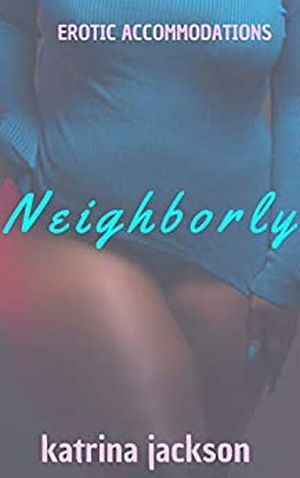
Neighborly by Katrina Jackson
This is probably my favorite of Katrina Jackson’s books, and I need more people to read it. There sits on a street a duplex with a shared garden. On one side, we have Heaven and Calvin, who have recently moved in. On the other side are Tasha and Stephen, the couple who own the building and have a nice domestic life. Heaven and Tasha are immensely attracted to each other, and when they decide to pursue that attraction, their partners are all for doing whatever makes them happy. Each couple gets to continue to build their own relationship, but the women are also working on building one between themselves. Those swords are never going to cross, but if sharing a bed contributes to their ladies’ happiness? There’s room for four.
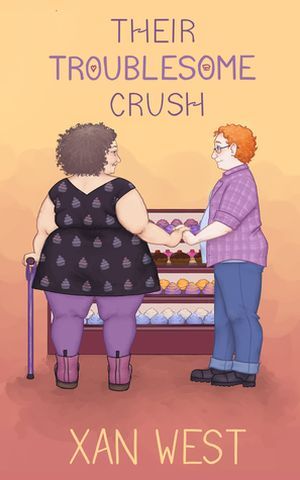
Their Troublesome Crush by Xan West
In this adorable novel, two metamours planning their paramour’s birthday party end up falling for each other. Ernest is autistic and loves showtunes. He also loves his partner and meets with Nora to plan a party for him. The two find kindred spirits in each other beyond the obvious, and venture into a non-sexual kinky relationship with the blessing (and encouragement) of their shared beloved.
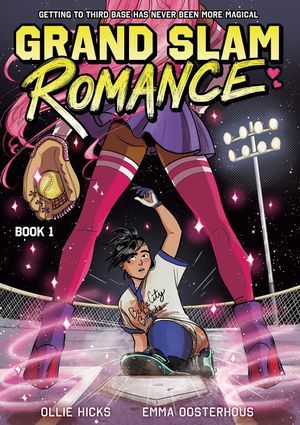
Grand Slam Romance by Ollie Hicks and Emma Oosterhous
What happens when you take semi-professional softball, fuckboys (genderneutral), and magic school, and toss them in a salad spinner? You get Mickey Monsoon, the greatest pitcher in town, Astra, their ex-best friend, who they might have been in love with, and Wolfgang, a German weirdo leading a superteam with the sole purpose of taking down Mickey’s team. There is regional rivalry, horse theft, and lots of miscommunication. This story is told over the course of three volumes, but I won’t consider it a spoiler to tell you that the endgame is a polyamorous relationship for our incredibly messy softball magical girls (genderneutral).

Boyfriends by Refrainbow
This silly comics series is like a cloud for your brain, so soft and airy. We have four college students with no names, just archetypes: jock, goth, nerd, and prep. In the first volume, the four of them circle around their crushes. Two of them are roommates, and there’s a tiny bit of jealousy/envy, until one of them suggests they just skip the complications and date each other. The continued volumes of the series (which started out as a WEBTOON and is fully available to read either online or unscrolled) are a combination of light plot and slice-of-life exploration of the four characters. It’s just delightful.
To sum up:
Polyamory: any form of romantic relationship involving more than two people—a couple in an open relationship, multiple people dating each other, one person dating several people, a group of people with different types of relationships (aka a polycule).
Why Choose: the romance category that centers on a main character and several love interests or partners. This can include a conclusion in which the separate love interests are all involved with the main character but not each other, or one in which everyone ends up in a relationship together.
Ethical Nonmonogamy: The term used for all kinds of polyamory and other related types of relationships in which a person or couple experiences love outside of monogamy.
Consider these definitions when you pick up your next romance, whether it features multiple partners or not. There have been countless why choose, polyam, and ethical nonmonogamy books produced in the romance genre over the past couple of decades, and there will continue to be more and more. It’s our job as readers to know what version of that story the author is telling. We can enjoy the fantasy of why choose as well as the grounded nature and logistics of real-life polyamory and ethical nonmonogamy, navigating between them with a joyful approach.
For more, check out these why choose romances, these books about love triangles that end in polyamory, and these polyamorous YA novels.
This content contains affiliate links. When you buy through these links, we may earn an affiliate commission.