As Long Beach leaders consider millions of dollars in cuts to city services to balance next year’s budget, the debate is putting renewed attention on how the city has managed some of its largest projects in recent years.
The city is confronting a $58.2 million structural deficit in its General Fund for fiscal year 2027 — the portion of the budget that pays for many of the city’s basic services, including police and fire.
While Long Beach’s total proposed budget is roughly $4 billion, much of that money sits in separate funds dedicated to specific purposes and cannot simply be used to cover the General Fund shortfall. To balance the General Fund, the city manager has proposed a combination of departmental reductions, funding shifts, new revenue and other cost-saving measures.
The projects examined below did not cause the current General Fund deficit, and many were paid for through separate funding sources. But as city leaders decide where to cut, the projects provide context on how Long Beach has managed tens of millions of dollars in public money — including projects that grew in cost, experienced years of delays or raised questions about oversight.
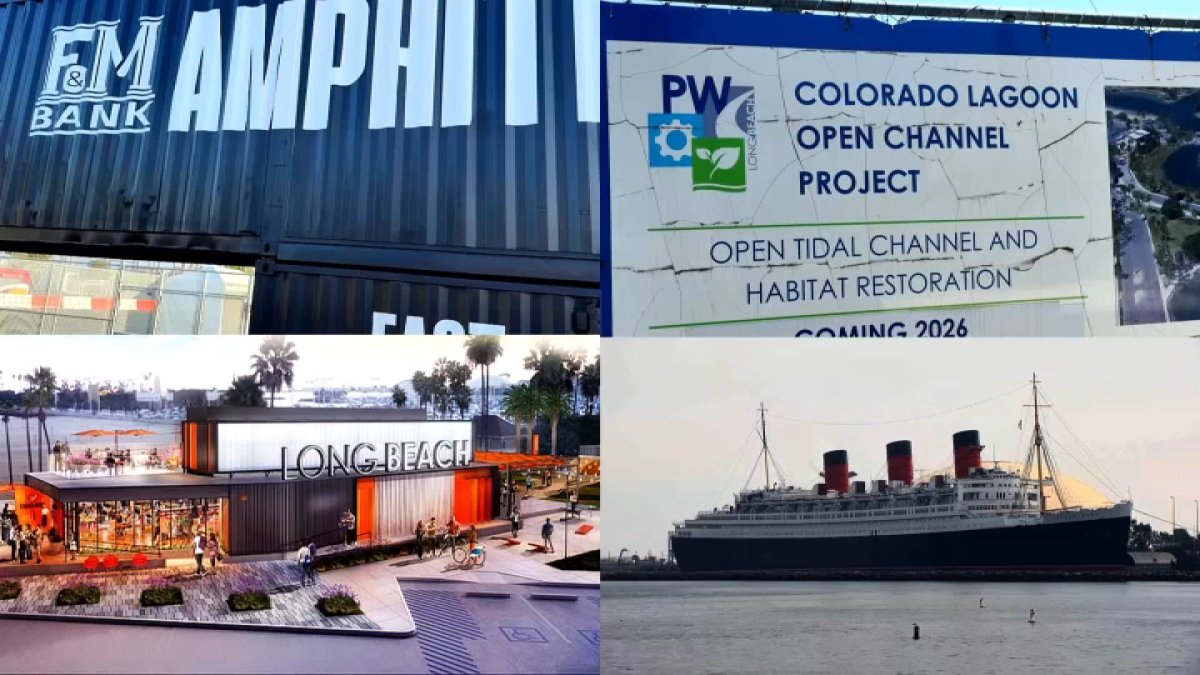
F&M Bank Amphitheater: $14 million became $21.3 million
When the Long Beach City Council approved plans for a temporary waterfront amphitheater, the city authorized $14 million for its design and construction.
By the time the F&M Bank Amphitheater opened in June, the price had increased to $21.3 million.
The additional costs included upgraded seating, a VIP lounge and additional video screens, along with increased construction and labor costs. The project was also originally expected to open in fall 2025.
The amphitheater is funded through the city’s Tidelands Funds, rather than its General Fund. Long Beach says the money is expected to be repaid through the venue’s net operating profits, projected at roughly $2.5 million to $3 million annually.
The temporary venue has an initial planned lifespan of about 10 years. City projections have estimated that it could repay the city’s investment in roughly eight years, leaving about two years of the initial operating period after the investment is recovered.
Colorado Lagoon: At least $4 million over budget and years behind schedule
The Colorado Lagoon Open Channel Project was designed to create a tidal connection between Colorado Lagoon and Alamitos Bay, improving water circulation and the lagoon’s ecosystem.
In 2019, the City Council authorized $26.3 million for the project. In 2022, the city awarded a construction contract of about $20.8 million, with contingency bringing the authorized contract amount to approximately $24.6 million.
The broader project later had an approximately $32 million budget, according to city documents. It is now at least $4 million over that amount.
The project was once expected to be finished in March 2024 but has been delayed repeatedly.
City officials have attributed the delays to several unforeseen conditions, including heavy rain, the discovery of numerous unmapped utilities, asbestos-containing materials and complications involving a sewer siphon. The city’s own June 2026 update acknowledged that the project remained delayed and that weather, asbestos discoveries and changing utility requirements continued to affect the schedule.
The delays have become significant enough that the City Council in March directed staff to return with a firm completion date.
Alamitos Beach concession building: $5.7 million construction contract, $10.1 million total project
The concession building at Alamitos Beach, now home to Gaucho Beach, also experienced substantial increases in cost and delays.
In March 2019, the City Council awarded the original construction contract to Klassic Engineering and Construction for $5.681 million, with a 15% contingency that allowed the contract to reach approximately $6.53 million.
Construction began in June 2019 and was initially scheduled to be completed by April 2020.
It wasn’t.
According to city records, the contractor struggled with scheduling, project submittals, staffing, deficiencies and required inspections. After multiple extensions, the city declared the contractor in default in August 2021.
The completed facility ultimately had a total project cost of $10.1 million and formally celebrated its grand opening in November 2023. The money came from the city’s Tidelands Fund.
The final price was nearly twice the amount of the original construction contract, and the building opened years after its original completion date.
Queen Mary: Nearly $45.7 million spent since 2016
Perhaps the most significant example is the Queen Mary.
Long Beach has spent nearly $45.65 million since 2016 on repairs, improvements and work needed to keep the historic ship operating, according to city financial records.
The spending stems in part from years of deferred maintenance under a series of private operators.
A 2016 marine survey estimated that the Queen Mary could require between $235 million and $289 million in repairs. The private operator at the time, Urban Commons, subsequently sought $23 million from the city to complete 27 urgent and critical projects.
What happened to that $23 million later became the subject of a City Auditor investigation.
The audit found missing payment documentation, excessive subcontractor markups and management fees, purchases that were not connected to urgent repair projects, inadequate subcontractor vetting and a lack of competitive bidding.
The City Auditor concluded that Long Beach paid more than necessary for some projects and that missing records and inadequate invoice details made it impossible to determine precisely where all of the money went.
Of the 27 critical repair projects, only seven had been completed when Urban Commons’ financial problems became apparent. Nine had not started.
The auditor also found that Urban Commons misrepresented financial information to the city, including submitting invoices indicating vendors had been paid when they had not.
Urban Commons ultimately filed for bankruptcy in 2021 and surrendered control of the Queen Mary to Long Beach.
The city pursued the former operator in bankruptcy court and obtained additional financial records. But Long Beach ultimately dropped its adversarial bankruptcy proceeding after determining that continuing the litigation was unlikely to produce a meaningful financial recovery.
No city employee or official was publicly disciplined over the oversight failures identified in the audit.
Since taking direct control, however, Long Beach has continued investing in the ship and reopened it to visitors in 2023. The city also entered into an agreement with the Port of Long Beach providing $12 million for repairs and reopening work.
And the financial picture has improved.
The Queen Mary generated just over $3.5 million in operating profit from June through December 2023, according to the city. City officials said that money would be reinvested into additional repairs and maintenance.
That operating profit, however, remained small compared with the nearly $45.7 million the city had spent on the ship since 2016, and significant maintenance needs remained.
Now, Long Beach faces another difficult budget
Those projects are now part of the backdrop to a much larger financial debate at City Hall.
Long Beach initially projected a roughly $61.3 million FY27 shortfall. Updated estimates put the structural deficit at $58.2 million. The City Manager’s proposed budget says it would close $55.9 million of that gap through structural balancing measures, with additional strategies used to balance the budget.
Public safety is among the areas facing reductions.
The proposed budget includes roughly $11 million in reductions involving the Fire Department, including eliminating positions and proposals that could affect engine staffing. City officials have stressed that the recommendations remain proposals while the City Council considers alternatives.
The city’s detailed budget also shows the Police Department’s General Fund decreasing approximately $6.6 million.
The City Council is holding a series of hearings before making its final budget decisions in September.
The debate presents Long Beach leaders with two questions at once: how to close a substantial budget deficit without sacrificing essential services—and what lessons the city should take from the costs, delays and oversight problems that have accompanied some of its largest projects over the past decade.