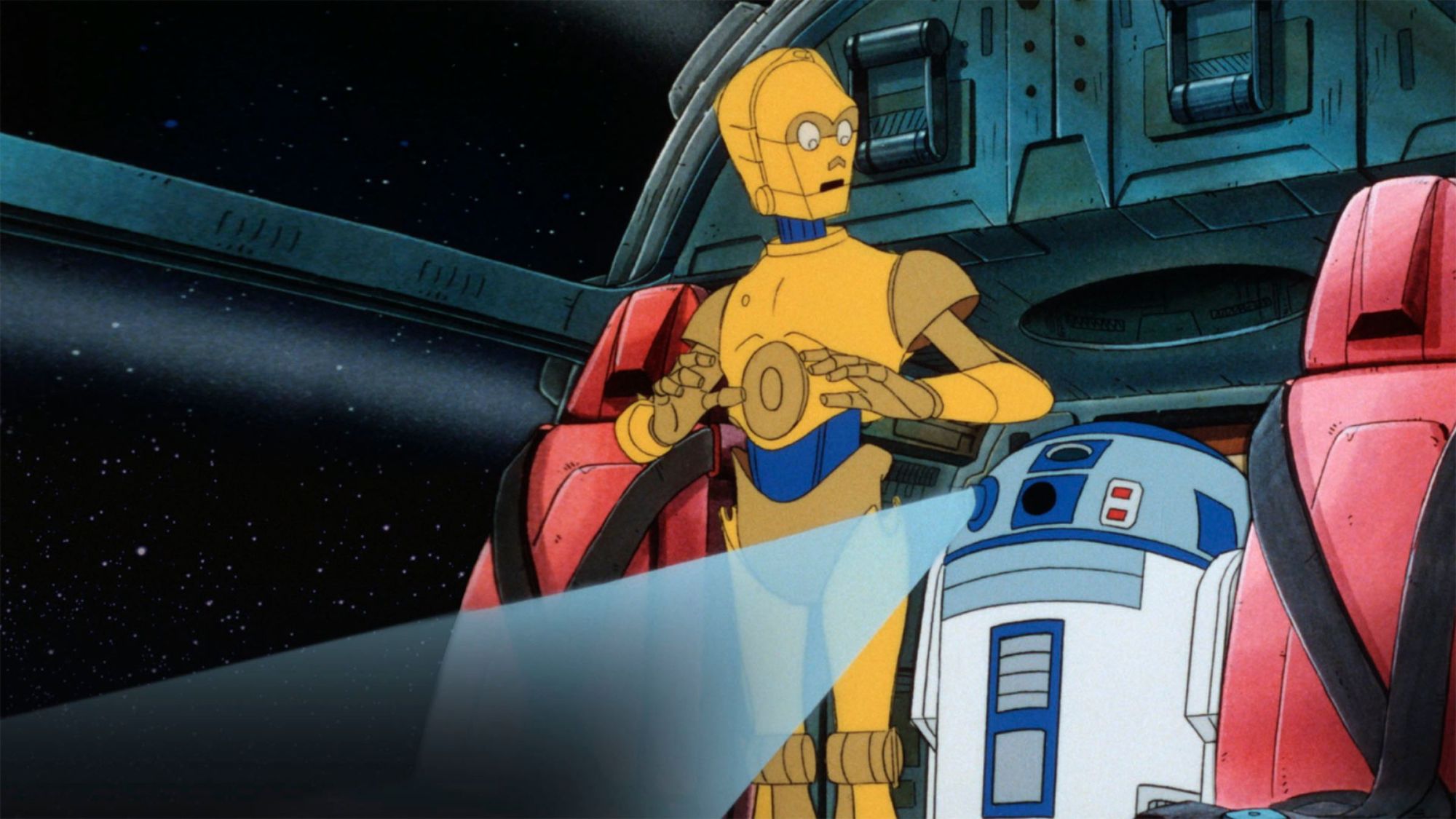
On Sept. 7, 1985, Star Wars invaded Saturday morning television from a galaxy far, far away. Not with Luke Skywalker. No Darth Vader in sight. Instead, kids got R2-D2 and C-3PO—and a bunch of furry little Ewoks from Endor. Although one aired for one season and the other for two, their impact is far more lasting and should be given the respect they deserve.
Beyond the fun and entertainment they provided young Star Wars fans in the ’80s, these cartoons weren’t some cheap knockoffs or generic kids fare to be quickly forgotten. They were Lucasfilm productions through and through. Made with the Canadian company Nelvana, these cartoons were designed as companion pieces occupying the same Saturday-morning hour. Many Star Wars fans who grew up on these two series have fond memories and consider them worthy of remaining a part of Star Wars canon. So, how did these shows become part of Star Wars history, only to later become something fans are told isn’t part of the story anymore?
C-3PO & R2D2 Star In Star Wars: Droids
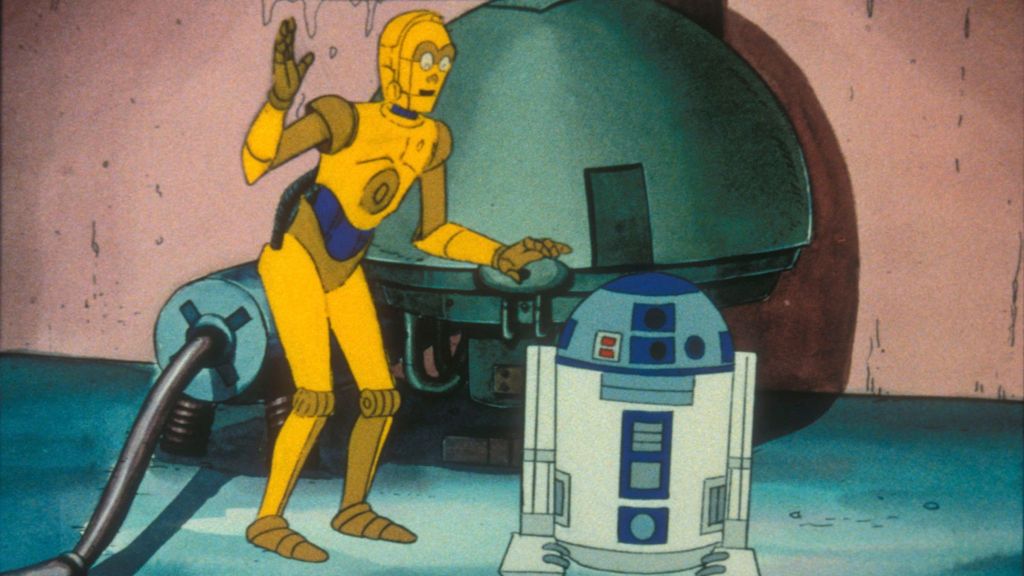
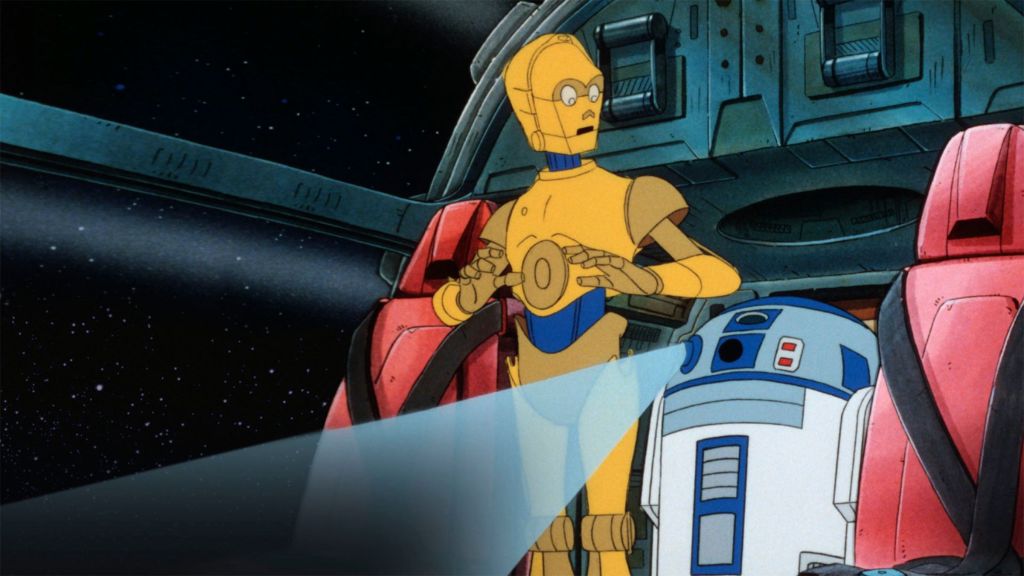
First up was Star Wars: Droids, which put R2-D2 and C-3PO at the center of the story. Set before they ever met Luke Skywalker, the series follows the two droids as they bounced from one master to another. They travel to new planets and get tangled up with criminals, pirates and bounty hunters. Boba Fett even shows up and creates a discrepancy with the timeline since the show is set around 15 BBY, but Fett sounds older. Later Star Wars continuity establishes him as a teenager during this show’s period. With Stewart Copeland of The Police performing the theme song, Droids felt like a grand Star Wars adventure rather than a cheap Saturday-morning imitation. More importantly, it introduced characters and arcs that would’ve been fantastic to see make a return in modern Star Wars stories. It was also the first prequel of the Star Wars franchise.
One standout character is Jann Tosh, a young miner and adventurer from Tyne’s Horky. After he encounters R2-D2 and C-3PO, he becomes one of their recurring allies. At first, he’s just a regular guy in the Star Wars galaxy. That’s something Droids did particularly well and something modern Star Wars particularly do: introduce an ordinary person that becomes part of an epic adventure. Without giving away too many spoilers, Jann is the reason that a lightsaber makes a single appearance in the season. Zzzzhhh! Characters like Jann made the galaxy feel real because not everyone needed to be a mythic hero or feared bounty hunter. And hey, there’s even a Kenner action figure of him. Collecting an entire set of Star Wars Kenner actions figures is a war that few ever win.
Then there’s Kybo Ren-Cha, the wonderfully ridiculous space pirate who embodies cartoon zaniness. Flamboyant, over-the-top and completely unafraid to be weird, Kybo becomes one of the show’s major villains. He’s also at the center of arguably the most memorable arc: “Revenge of Kybo Ren.” The arc even sends him into hiding on a moon of Bogden, a name that would later appear elsewhere in Star Wars lore. That’s part of what makes revisiting Droids so much fun: these weren’t always just forgotten cartoon ideas. Some of them actually escaped into the larger Star Wars universe. The same goes for the Fromm Gang, a criminal family with ambitions of controlling the galaxy. Their feud with R2-D2 and C-3PO eventually brings Boba Fett into the picture. They’re small-time criminals in a gigantic galaxy—and that adds character to the Star Wars universe, both literally and figuratively!
Some of the show’s stories also show just how much room Droids had to play with the Star Wars universe. The “Trigon One” arc throws R2-D2 and C-3PO in with speeder racers and Rebel allies as they battle the Fromm Gang over a superweapon, while the “Roonstone” arc sends the droids on a dangerous hunt for the mysterious Roonstones. They’re accompanied by their new master, Mungo Baobab, and go up against the Empire and a corrupt governor. What stands out isn’t just the plots, but the worlds, vehicles and distinctive visual style surrounding them. Watching Droids today shows an era when Star Wars could introduce an entirely new planet, strange vehicle or eccentric character simply because it seemed like fun.
Ewoks Was a Fantasy Adventure
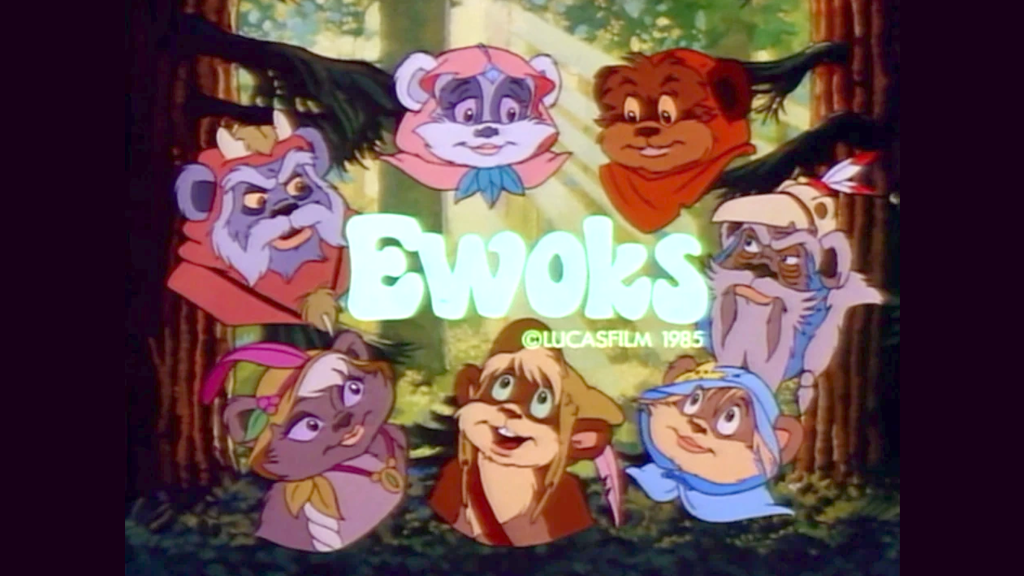
Then there was Star Wars: Ewoks, which had a very different flavor from Droids. It was a fantasy adventure for kids, filled with friendship and family. Set on Endor before the events of Episode VI, the series expanded on the Ewoks from Return of the Jedi. It was about Wicket, Kneesaa, Teebo, Latara and the rest of the Ewok community. And beyond what you’d expect from Star Wars at the time, there were witches and even more bizarre creatures. The show demonstrated how enormous the Star Wars universe already felt in 1985, with stories happening far away from Luke, Vader and the Death Star.
The world of Endor was far more exotic than the movies had led us to believe. Morag the Tulgah Witch was introduced as an evil magical counterpart to Logray, who was the chief medicine man of Bright Tree Village. Morag brought spells, mystical artifacts and a personal grudge against the Ewoks. Then there were the Duloks, a rival species related to the Ewoks who lived in the swamps of Endor. The two species regularly crossed paths, and not on particularly good terms. Even the Ewoks themselves had distinct personalities and family histories, rather than simply serving as a furry army in the background. Episodes such as “Wicket’s Wagon” leaned into the show’s imaginative side with fantastical technology and strange vehicles, while the story of Asha, Kneesaa’s older sister, gave the series a surprisingly emotional family story. It all made Endor feel less like a single movie location and more like a living world with its own growing mythology.
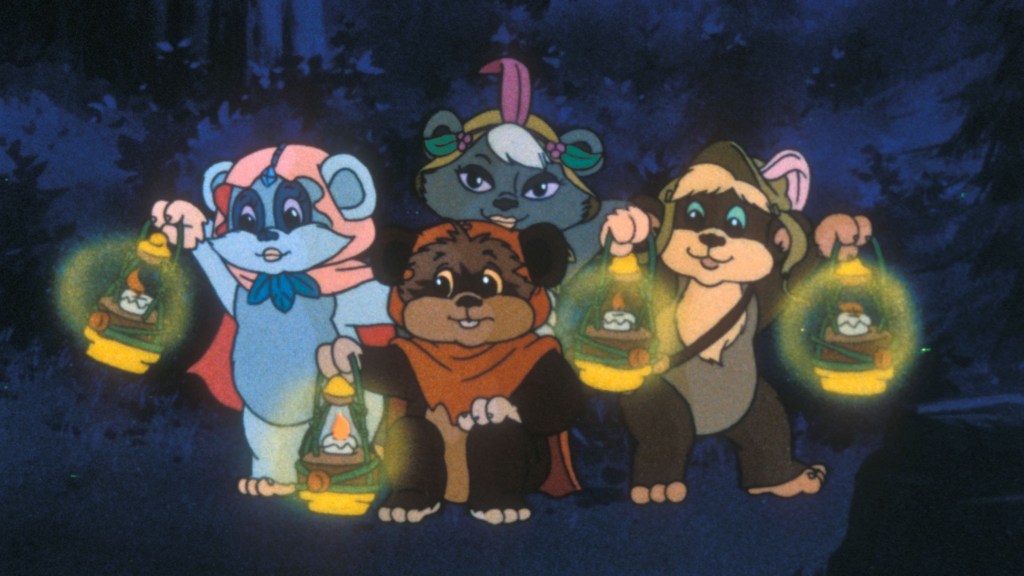
And then there was “Battle for the Sunstar,” perhaps the most intriguing example of how far the cartoon was willing to take the Ewoks. The story pulls them into an adventure involving an Imperial Star Destroyer and a dangerous plan that threatens the Emperor. It brings the seemingly small world of Endor into direct contact with the larger galactic conflict. That’s what makes the Ewoks cartoon so fascinating: Endor became a living fantasy world with its own villains, family histories and adventures. Why shouldn’t the modern Star Wars universe have room for weird rival species, magical and fantastical stories like these? They are exactly the sort of strange world-building that made the old cartoons memorable. It also turns out that the one of the rarest Star Wars vintage toys is an Ewoks vehicle.
When Star Wars reset its canon in 2014, moving the old Expanded Universe into “Legends,” Droids and Ewoks were left behind with it—a small but sad casualty of the franchise’s effort to create a streamlined continuity. Without getting into too many specifics, Star Wars canon was arguably damaged.
And that’s why I miss these cartoons so much. Both shows came from an era that wasn’t afraid to blend the style of a kids’ cartoon with the grown-up world of Star Wars. They weren’t perfect, and they didn’t need to be. They made Star Wars feel bigger, stranger and more imaginative—a galaxy where two droids could wander from master to master, or a group of Ewoks could have adventures of their own on an exotic world. They may no longer be part of the official story, but that doesn’t make them any less a part of the memories of the fans who grew up with them. And maybe that’s a kind of canon too.