We independently evaluate all recommended products and services. Any products or services put forward appear in no particular order. if you click on links we provide, we may receive compensation.
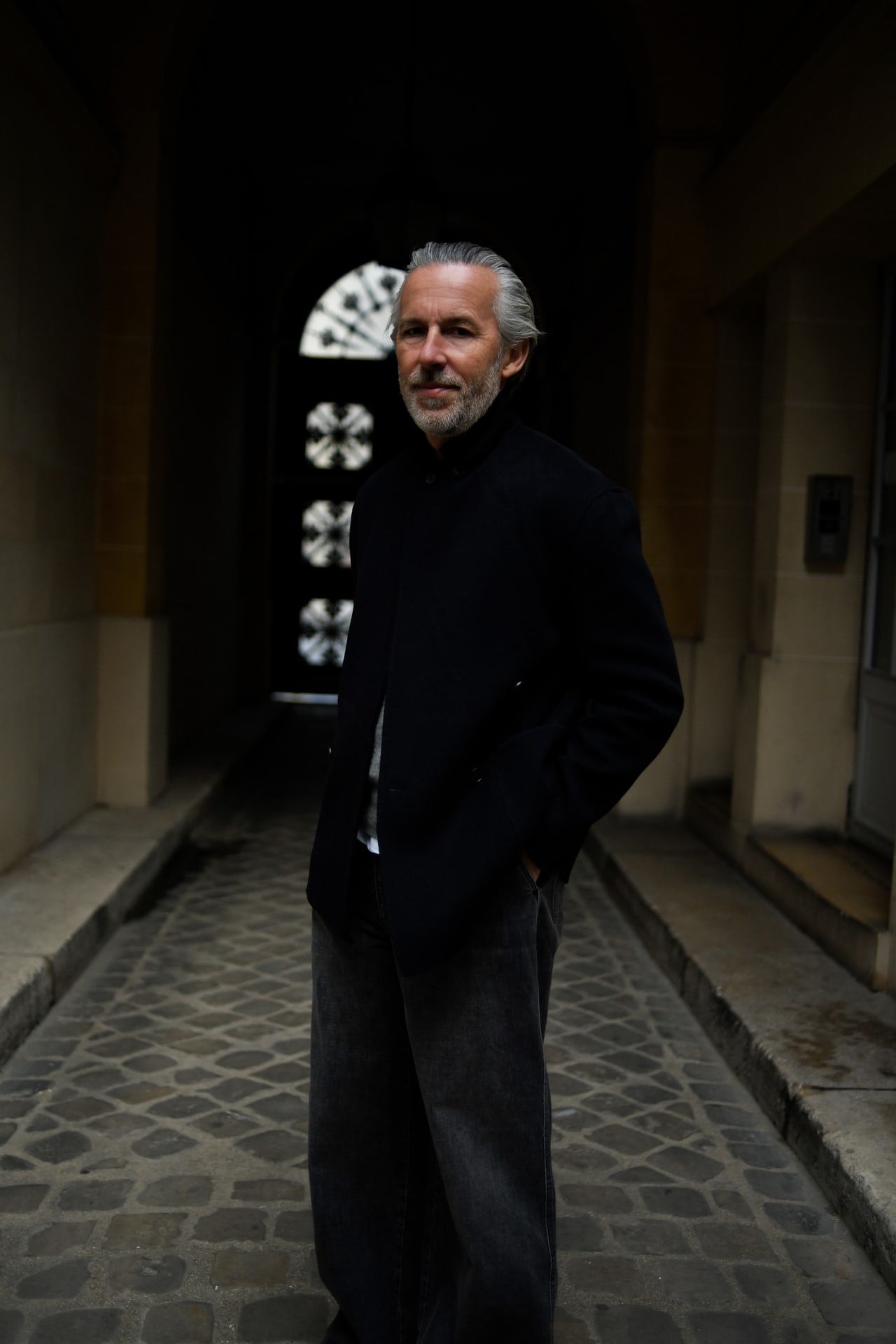
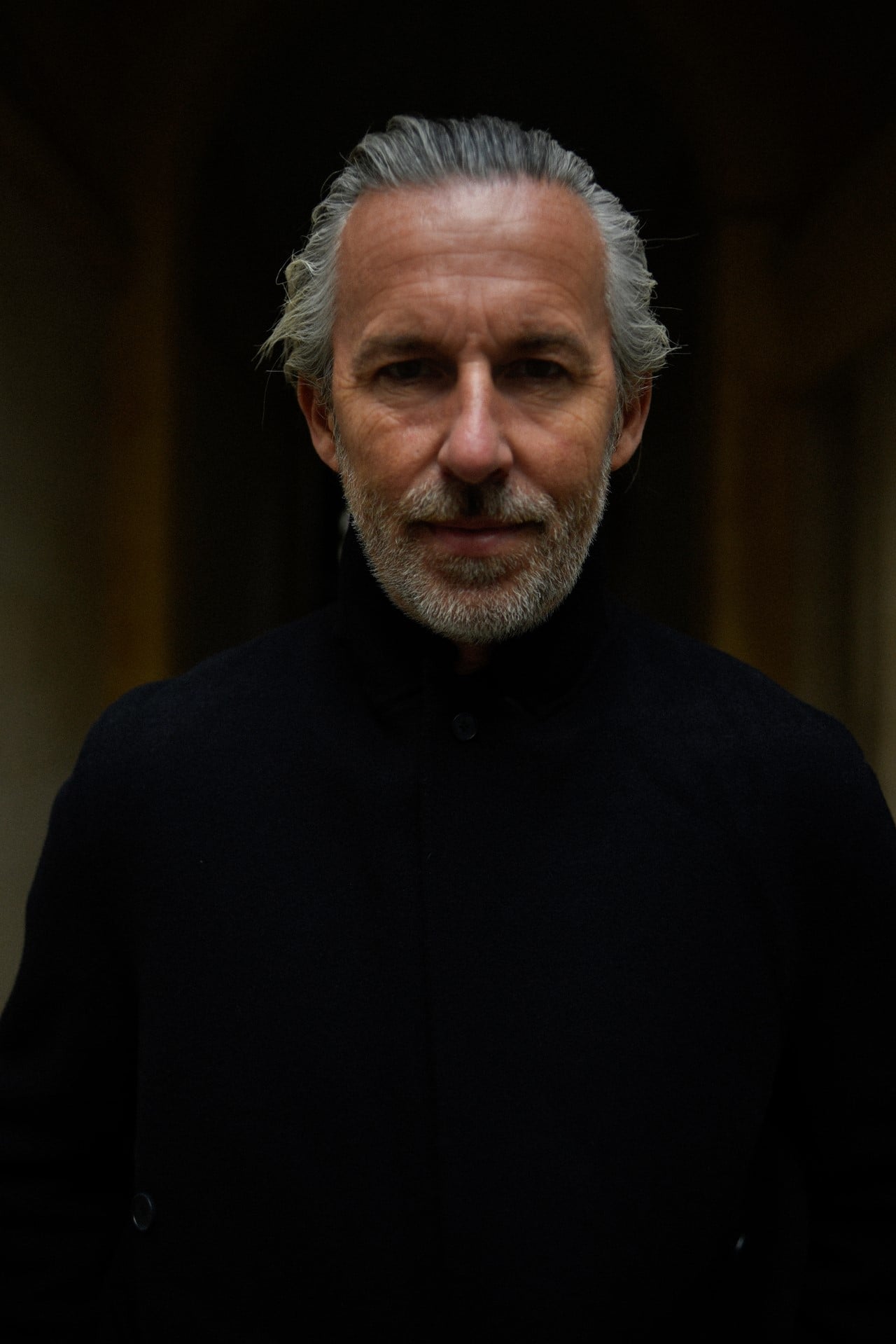
Pierre Mahéo loves flannel. He just can’t wear it any more.
“I am maybe the biggest fan of traditional flannel,” the founder and creative director of Officine Générale tells us, “but I can’t wear it anymore.” He still wears the jackets from his flannel suits. The trousers, he says, are too heavy for an office day.
That small admission explains one of the more quietly clever things the Paris label has done lately: a flannel that carries the look of the English original without the burden. It looks substantial and feels soft and light. We sat down with Mahéo to find out how it was made, why he distrusts the word heritage, and what he did when a heatwave arrived in the middle of a collection about summer.
Flannel, Built From The Hand Outwards
Everything starts with touch. “The first thing a customer will do in-store is grab a product by hand,” Mahéo says, “so it is really important. If I don’t like the hand feel, it doesn’t pass to the next stage.”
The brief was a deliberate contradiction: “a heavy-looking fabric, like an English flannel, but when you touch it, it would be soft and quite light.”
Traditional flannel offers none of that. In Mahéo’s words it has weight, barely moves, is rigid, and has a “pretty harsh” hand feel. He isn’t trying to preserve any of it. “You can’t keep it intact; it is impossible,” he says. “My goal was to get the visual look of flannel, nothing else.”
The real hurdle wasn’t breathability. “Weight was.” Getting a heavy look onto a lightweight cloth took three steps: choosing the right yarn, adjusting the number of plies in the warp and weft, and then working on the finishing after weaving. It was developed with one of the label’s major Italian mills, and Mahéo is typically unshowy about it. “It is not a quality that deserves groundbreaking research and development, just a different point of view.”
Fabric always comes first in his process, for a practical reason: lead time. Developing something exclusive, or reworking an existing quality, takes long enough that the cloth has to be settled before the shapes. Very often, he says, they start from something that already exists.
What a Lighter Flannel Makes Possible
Mahéo describes himself as obsessed with matching colours. For the Essentialism collection he wanted full navy, grey and brown looks that were commercially realistic, not simply show pieces.
“Weight was the answer,” he says. “There was no way I could have a shirt, a foulard or a big scarf in traditional flannel.”
That is the real payoff. A flannel shirt that drapes. A scarf you can wrap twice without feeling it. One colour from collar to hem, in one cloth, without the stiffness that usually comes with the territory.
Authenticity Over Heritage
Menswear is currently preoccupied with heritage fabrics. Mahéo isn’t sure it’s the right word. “I’m not sure if I would talk about heritage, but maybe more about authenticity and how to adapt it to today’s world.” Easy in some cases, he admits, “but not always.”
He is equally direct about the industry’s appetite for revival. “The best menswear fabrics were mostly developed decades ago. Bringing them back as they are, or updating them, is not innovation to me; it is more cultural.” What he does instead is keep testing, sometimes with very small changes, new qualities and new shapes.
Dressing For The Heat
The same thinking runs through his note for the Spring-Summer 2027 collection, Crossing Paths, presented at the Port de l’Arsenal in Paris, a venue that had never hosted a fashion show before. Mahéo chose it for the water and the lingering chill of early spring, which reminded him of harbours and stations, places where everyone is rushing toward their own destination. He pictured a collection that was “elegant yet relaxed, generous in volume and light in spirit.” Then came a heatwave he never expected.
His answer is the instructive part. He admits he could have been tempted to cut the sleeves off jackets and shirts, or turn every pair of trousers into shorts, to reflect the mood of the moment. He didn’t. That, he writes, “would not have been true to Officine Générale, whose commitment is to offer clothing for every kind of weather throughout the season.”
The collection remains a complete wardrobe, made from tailored pieces in suiting fabrics, structured poplins, denim, fine knits and premium leather. Only pieces that are actually sold made it to the show. Spring and summer, as he puts it, have become increasingly complex seasons, swinging from one extreme of temperature to another over six months.
Set the flannel beside the collection and they are the same idea. A cloth that looks substantial and wears light. A summer wardrobe that refuses to chase the weather. In both cases Mahéo is solving for how clothes behave on an actual day, not how they photograph.
The Takeaway
The most useful part of this conversation is what Mahéo declines to claim. He isn’t reinventing flannel, and he says as much. He is keeping its look, dropping its weight, and making it wearable for a man who had stopped wearing it himself.
So when you next pick up a piece, do what he does. Feel it before you look at it.

The editorial team at FashionBeans is your trusted partner in redefining modern men’s style. Established in 2007, FashionBeans has evolved into a leading authority in men’s fashion, with millions of readers seeking practical advice, expert insights, and real-world inspiration for curating their wardrobe and lifestyle.
Our editorial team combines over 50 years of collective experience in fashion journalism, styling, and retail. Each editor brings specialized expertise—from luxury fashion and sustainable style to the latest grooming technology and fragrance science. With backgrounds ranging from GQ and Esquire to personal styling for celebrities, our team ensures every recommendation comes from a place of deep industry knowledge.