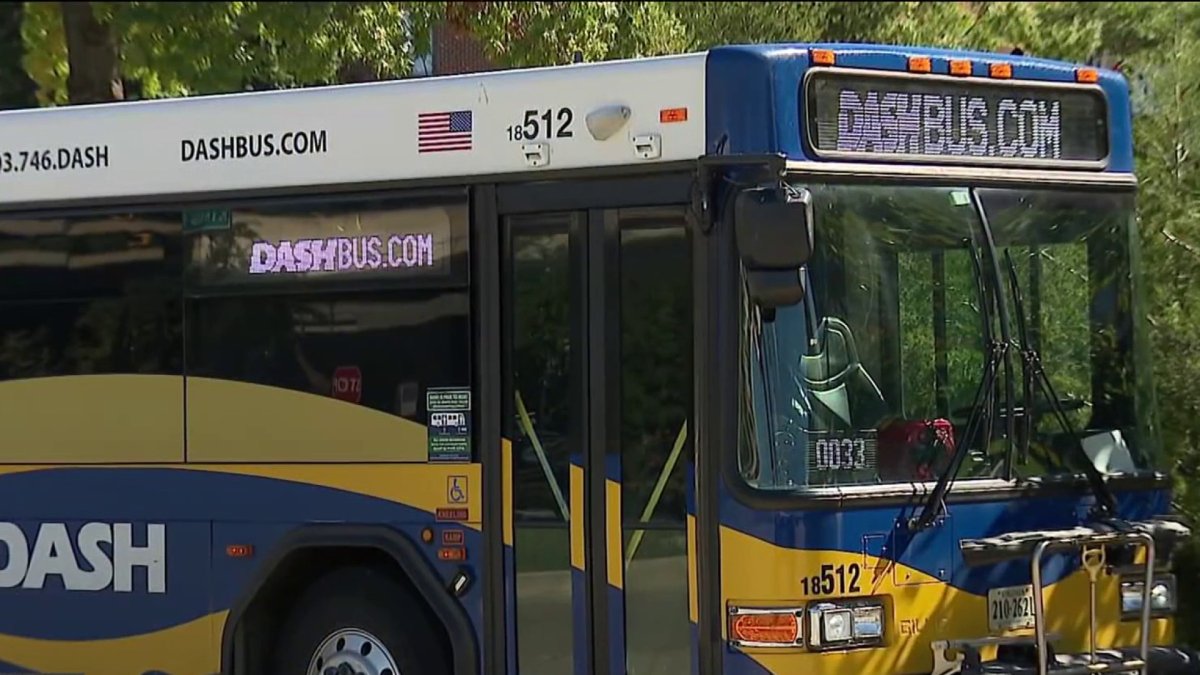
The Los Angeles City Council on Wednesday authorized the installation of up to 50 cameras on city DASH buses, as part of an effort to expand an automated bus lane enforcement program.
The 13-1 vote approved a resolution designating specific street segments as bus lanes, and approving the Department of Transportation’s updated automated license plate reader use policy.
Councilman John Lee opposed the matter, while Councilwoman Eunisses Hernandez was absent during Wednesday’s meeting.
The LADOT would implement the program as of Nov. 1, starting with cameras on 30 buses covering all downtown DASH routes (A, B, D, E, F and Pico-Union. A second phase would follow after Jan. 27 with the addition of 20 more cameras on buses traveling through routes in Crenshaw, Panorama City/Van Nuys, Watts and Wilshire Center/Koreatown.
The city would issue warnings for the first 60 days of the program.
During a 60-day pilot, LADOT collected data for more than 2,400 violations along DASH routes A and F and stops in the downtown area. On average, there were four bus lane violations per bus per hour, including vehicles parked illegally at bus stops. Such violations slowed down boardings and alightings, and caused safety risks and traffic delays, officials said.
Council approval is necessary for LADOT to move forward with a proposal to piggyback off an existing Metro contact with Hayden AI for the installation, operation, management and maintenance of up to 50 cameras on DASH buses for a term of three years. If finalized, the contract would cost the city $3.43 million.
While LADOT officials are anticipating the program to operate for three years, it is contingent on the extension of a 2021 state law. In 2021, Gov. Gavin Newsom signed AB 917 into law, which authorized public transit agencies statewide to implement programs that collect video images of parking violations in bus lanes and zones, and to issue and adjudicate parking citations.
The authority is effective until Jan. 1, 2027. However, AB 1837, recently approved by the state Legislature, extending the authority under AB 917 to Jan. 1, 2034. If Newsom signs AB 1837, Los Angeles will be able to operate the program through 2029, and if not, the city will only do so for three months. The city would only cover costs for duration of the contract, and can terminate the agreement sooner if the law is not extended.
City Council members John Lee and Monica Rodriguez criticized the proposal Wednesday, citing issues with LADOT’s ALPR policy.
Lee said it was hypocritical for his colleagues to support the use of ALPR technology in this program, while opposing a three-month pilot program for ALPR technology on street lights sought by the Los Angeles Police Department.
“I think that this body (should) maintain the same level of scrutiny for all ALPR contracts in the city,” Lee said.
According to Lee, LADOT’s ALPR policy authorizes users, who also include contractors that aid LA in carrying out the authorized use, to access data.
“Given the master data license and protection agreement is between the city and Hayden AI, I have very serious concerns about the contractor having access to our data. There have also been recent accusations between the founders of Hayden AI of fraud and espionage, including the sharing and distribution of company secrets,” Lee said.
“While this does not appear to have affected the city of Los Angeles residents, these are nevertheless serious accusations that should be considered by this body as we determine the path forward for the use of ALPRs in our city,” he added.
Rodriguez, who voted in support of the item, thanked Lee for “exposing the inconsistencies when it comes to which agency is authorized or not authorized” to use such technology. The councilwoman said the issue is why she introduced a motion calling on the city to examine data usage and data collection across all departments.
“We should have these guardrails and protections with data sharing across all city departments, across every single department, every single contract,” Rodriguez said. “Everyone needs these extra sets of eyes so that we can better aid our communities in helping to assure greater public safety outcomes.”
In 2023, Metro executed an agreement with Hayden AI, following a competitively bid request for proposals to acquire camera hardware and software for 100 cameras, as well as operate and maintain the technology and provide data processing services.
Metro and the city partnered on the automated bus lane enforcement program to place those 100 cameras on Metro buses operating on five bus routes that cross the city’s jurisdiction.
According to LADOT, since the Metro program launched in November 2024 through January 2026:
- It has sent 281,000 potential violations to the citation management system;
- Generated more than $21 million in gross revenue;
- Improved speed and reliability of the routes in the program on routes 212 and 720 by 7% to 9.8%;
- Changed behavior in drivers with about a 33% drop in citations issued after one year, about 77% of people only committing one violation, and reduced chronic offenders; and
- Improved rider satisfaction and safety.
A LADOT report said record requests that originate from a law enforcement agency for citation information collected by the city requires a subpoena and consultation with the City Attorney’s Office for appropriate processing.