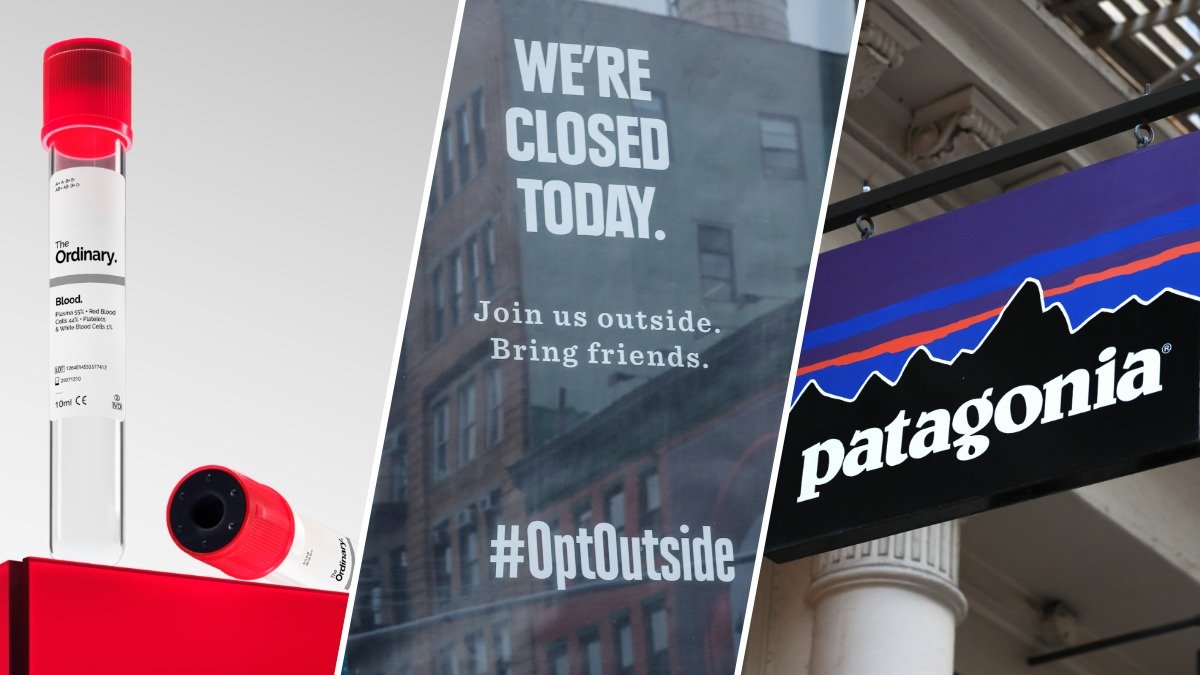
Black Friday has long been synonymous with doorbuster deals, packed stores and the unofficial kickoff to the holiday shopping season.
This year, the National Retail Federation expects 183 million consumers to shop over Thanksgiving weekend, underscoring the continued importance of Black Friday for retailers and shoppers alike.
Yet while many companies are competing for consumers’ dollars, a small group of brands are voluntarily stepping away from one of the year’s busiest shopping days. Instead of promoting discounts and sales, they’re encouraging people to spend time outdoors, donate blood or support environmental causes.
REI, The Ordinary and Patagonia are among the most visible examples, though they are far from the only companies that have used Black Friday to promote missions beyond shopping.
Though united by a rejection of traditional Black Friday consumerism, their missions differ. REI encourages customers and employees to spend time outdoors, The Ordinary is directing attention toward blood donation and public health and Patagonia has historically used the holiday to promote environmental activism and conscious consumption.
REI wants shoppers to opt outside
For the 11th consecutive year, REI will close more than 195 stores, distribution centers and offices on Black Friday as part of its #OptOutside campaign, an initiative that began in 2015. The company says roughly 12,000 employees will receive a paid day off and be encouraged to spend time outdoors rather than work or shop.
The campaign, which REI made permanent in 2022, has become one of the most recognizable examples of a retailer stepping away from the traditional Black Friday playbook.
More than a decade after launching the initiative, REI says the reasoning behind it remains unchanged.
Sometimes the hardest part about getting outside is making time for it, REI says. The company gives its employees a paid day to do just that and invites everyone else to join in.
At a Dallas-area REI, shoppers interviewed by NBC said they appreciated the company’s willingness to prioritize something other than sales, even if many were unfamiliar with the initiative before it was explained to them.
“They’re probably losing a lot of money because people go shopping on Black Friday, but give that up,” Grace Son said. “They’re getting paid to go outside … it’s really amazing.”
Her daughter, Ellie, 12, said the campaign’s emphasis on outdoor experiences resonated in an era dominated by screens.
“Nowadays, especially in this generation, we’re all on our phones and just doomscrolling on our couch,” she said. “I think connecting with nature and exploring our world is really valuable.”
Yuxin Lin said he didn’t view the initiative as simply a marketing campaign because REI “can definitely take advantage” of Black Friday sales if it wanted to.
Another shopper, Nicole Larso, said the effort feels authentic because promoting outdoor experiences is something REI does year-round, not just during the holiday shopping rush.
The Ordinary trades sales for blood donations
The Ordinary is taking a different approach.
For the seventh consecutive year, the skincare brand will close its stores and website on Black Friday. This year, instead of selling products, it will host blood drives at stores in New York and Toronto in partnership with the New York Blood Center and Canadian Blood Services.
Additional awareness activations are planned in London and Copenhagen.
The company is also committing 100,000 Canadian dollars globally to blood donation organizations, including contributions to New York Blood Center and Canadian Blood Services.
The initiative stems from The Ordinary’s long-running opposition to the fear-of-missing-out marketing commonly associated with Black Friday.
“Every year, Black Friday manufactures urgency around things we do not need,” the company said in announcing the program. “This year, The Ordinary is pointing that urgency at something essential: blood donations.”
Amy Bi, The Ordinary’s senior vice president of brand, said the campaign reflects the company’s broader philosophy.
“Blood is essential in a way nothing on our shelves will ever be, and a shortage is what happens when that accessibility breaks down for the people who need it most,” she said.
The focus on charitable giving may resonate with consumers. According to a National Retail Federation holiday survey, roughly 65% of consumers say they plan to participate in charitable activities this season, including donating money, donating goods or purchasing from brands that support social causes.
According to the American Red Cross, holiday periods often coincide with declines in blood donations despite ongoing demand from hospitals and patients.
Patagonia doubles down on mindful consumption
Patagonia drew national attention in 2011 for its “Don’t Buy This Jacket” campaign, which urged consumers to consider the environmental impact of their purchases. In 2016, it donated 100% of Black Friday sales to grassroots environmental organizations.
This year, the outdoor apparel company said it will not hold a Black Friday sale.
Instead, the company said it plans to encourage customers to shop thoughtfully and support environmental organizations.
“As Patagonia has for years, we will continue to urge our community to be mindful with their purchases, buy used if they can and spend time in nature with friends and family,” spokesperson Gin Ando said in a statement.
On Giving Tuesday, Patagonia said it will spotlight nonprofit partners and encourage consumers to support efforts to protect the planet.
Why some brands are taking a different approach
Retail consultant Lisa Hutcheson said companies such as REI, Patagonia and The Ordinary are choosing to reinforce their brand values rather than compete on discounts.
For brands built around environmental stewardship, outdoor recreation, community engagement or conscious consumption, she said participating in one of the year’s largest shopping frenzies could conflict with the values they promote throughout the rest of the year.
“It really solidifies with your customer who you are as a company and what your values are,” Hutcheson said.
Rather than chasing a one-day sales spike, she said these companies are often looking to deepen relationships with existing customers.
“They really are trying to build their customer loyalty through their brand promise, versus just attracting bargain hunters that are out there for the day,” she said.
Hutcheson said standing apart from the Black Friday rush can carry its own benefits.
“The media that they get around differentiating and opting out is just as valuable, if not more valuable, than opting in and being caught up in the chaos and hype of Black Friday,” she said.
Most retailers still embrace Black Friday
Companies like REI, The Ordinary and Patagonia remain exceptions rather than the norm.
For most retailers, Black Friday remains one of the year’s most important sales opportunities.
Amazon, for example, is running a 12-day Black Friday Week and Cyber Monday event from Nov. 19 until Nov. 30 that features millions of deals, themed promotions and expanded shopping tools.
“Customers count on Amazon for low prices and great selection every day, not just during the holidays,” Doug Herrington, CEO of Worldwide Amazon Stores, said in a statement announcing the event. “This Black Friday Week and Cyber Monday, we’re taking that even further with thousands of deals on the most-loved gifts.”
The contrast highlights the two very different visions of Black Friday. For most retailers, the holiday remains centered on helping shoppers find deals. For a smaller group of brands, it’s an opportunity to challenge consumers to think differently about what they buy.