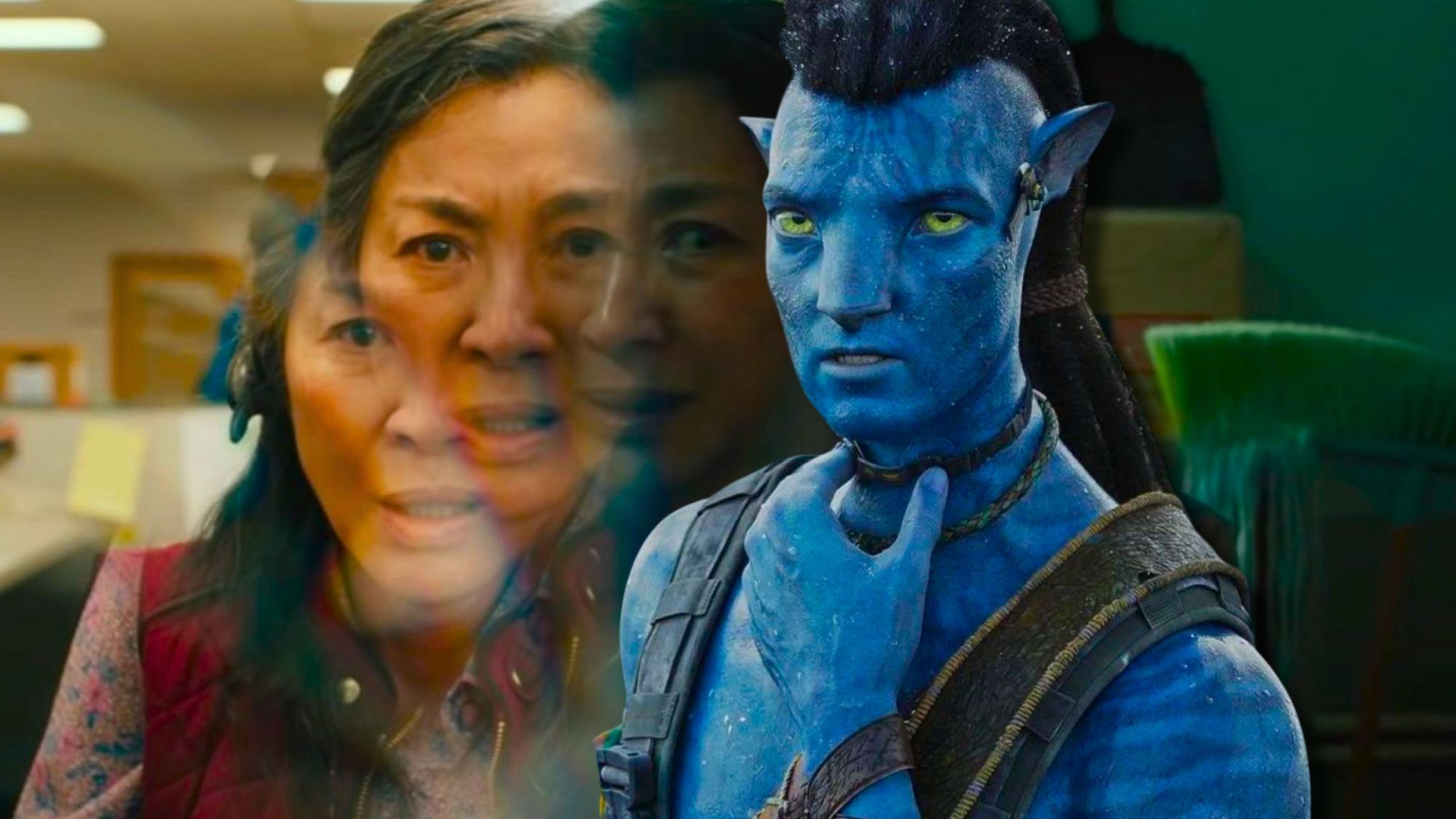
It sounds easy, but combining two genres in a movie without making them clash is actually pretty difficult. On the other hand, when it comes to fantasy and sci-fi, which are two of the genres we see mixed together most often, it somehow feels easier. One usually relies on technology, space travel, complex scientific concepts, and ideas that try to explain the impossible, while the other is all about magic, supernatural creatures, or powers with no real explanation that audiences are still willing to fully buy into. Put them together in the same universe, and the result can be far more interesting than just following the rules of either genre on its own. Several films have proven that this combination can work, and some of them have even made it to the top of the biggest awards ceremony in Hollywood.
Can you think of a few? Do you have a favorite one that fits into this category? We picked 5 of the best examples to show just how great these two genres can be when they come together to tell a story. When the mix is done right, one can even solve the problems the other couldn’t handle on its own.
5) Avatar Franchise
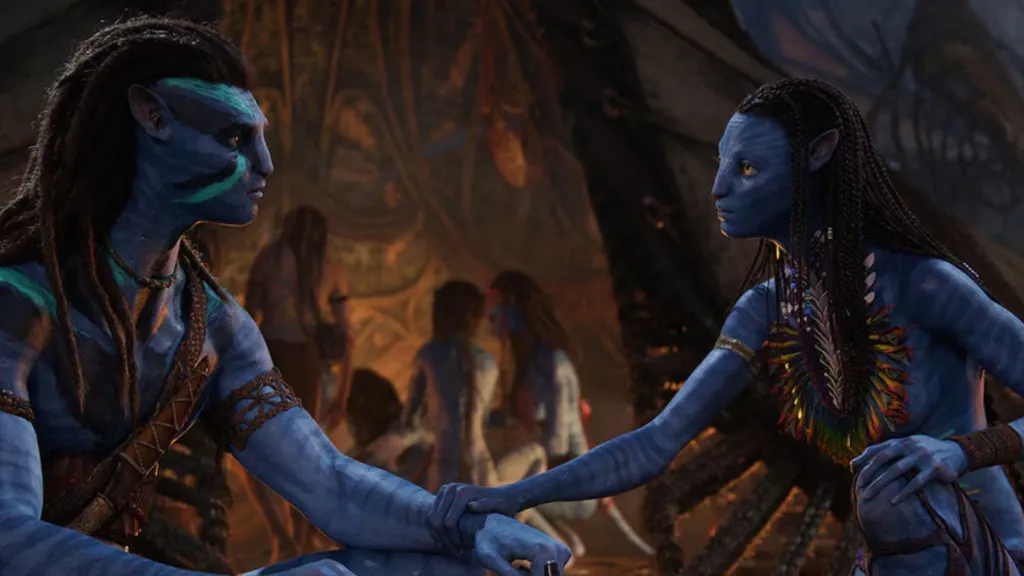
Avatar is a case where trying to separate sci-fi from fantasy is harder than accepting that the franchise works because it has both. James Cameron’s famous story begins with Jake Sully (Sam Worthington), a former Marine who travels to Pandora to take part in the Avatar program and ends up caught in the conflict between the humans who want to exploit the planet and the Na’vi, who live in deep connection with their environment. And the scientific side is pretty much everywhere in the franchise’s structure: space travel, advanced military technology, the genetically engineered Na’vi bodies, and the very idea of humans remotely controlling these bodies. However, the world of Pandora is anything but scientific.
The fantasy side of the saga comes into play through the Na’vi’s connection to Eywa, the way all living things are biologically connected, and the spiritual dimension of that relationship. Part of the reason Avatar remains such a hugely popular saga today is its immersion, and maybe that has something to do with how well it combines these two genres. Unlike other stories, you don’t simply come face-to-face with an alien planet, because even though it has plenty of sci-fi concepts, there’s an entire mythology filled with creatures and an energy that the human characters initially can’t understand. In short, here, sci-fi explains the context, while fantasy helps define what makes the universe so different.
4) The Shape of Water

Guillermo del Toro is a dark fantasy master, but here he managed to blend that with sci-fi so well that it earned the movie an Oscar. The idea behind The Shape of Water is to have a humanoid creature (Doug Jones) being held in a secret laboratory during the Cold War, which could lean into things like military experiments, monsters, and scientists doing questionable things. And in fact, all of that is there, but at the same time, much of the story focuses on what happens when the creature meets Elisa (Sally Hawkins), a mute laboratory worker who starts developing a relationship with him. It’s basically a kind of fairy tale with a touch of science to complement it.
Having that dose of both genres even allows the movie to avoid a problem that has become pretty common in many productions: the need to explain absolutely everything. At no point does this film turn the creature into some scientific mystery with a definitive answer, because its role in the story is bigger than that. In the end, sci-fi creates the whole situation, but it’s fantasy that allows the movie to tell a love story between two people who, according to everyone around them, should never be together. Surprisingly, The Shape of Water isn’t usually remembered quite as much as it should be, but it really is a masterpiece.
3) The City of Lost Children
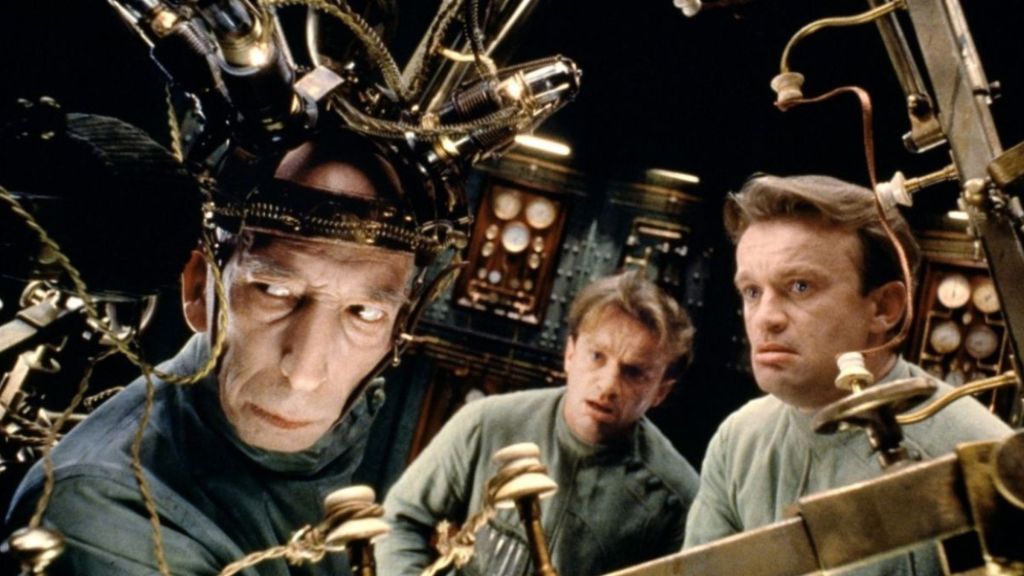
From this list, The City of Lost Children is definitely the one that many people probably haven’t even heard of, and that’s understandable since it’s pretty strange if you don’t fully buy into what it’s trying to do. In this ’90s movie, we meet Miette (Judith Vittet), a girl who tries to rescue her brother after he is kidnapped by Krank (Daniel Emilfork), a man who can’t dream and starts stealing children’s dreams using a machine. From there, we get clones, experiments, and bizarre inventions that obviously make it easy to see why the film would be considered sci-fi. However, the whole concept of literally stealing dreams is totally fantastical. And the best part is that neither genre really weighs more than the other — it’s practically 50/50.
And, to be honest, trying to classify it too rigidly would probably take away some of the fun, because the entire world of The City of Lost Children is one where technology and fantasy follow the same absurd rules. In other words, a machine can do something that looks supernatural, while a phenomenon that seems impossible is treated by the characters as if it’s just another scientific problem to solve. So basically, nothing about it is traditional, and you have to really dive into its vibe to get the most out of it. It sits right in that middle ground where the two genres start to blur together — and for a movie this peculiar, that’s perfect.
2) Everything Everywhere All at Once

Who remembers the 2023 Oscar winner? It was widely praised for its boldness and creativity. In Everything Everywhere All at Once, Evelyn Wang (Michelle Yeoh) already has enough problems to deal with, between running a laundromat, dealing with an IRS audit, and navigating a complicated family, when she finds out that there are several versions of herself living across parallel universes. So we’re talking about a multiverse that doesn’t take long to explore different versions of the characters, absurd powers, completely ridiculous universes, and a threat that could affect all of existence. And, of course, when it revolves around different dimensions and realities, the movie clearly falls into sci-fi. However, forget about the rules of that genre.
It’s no wonder that people who watch it often describe it as pure chaos. There are elements of fantasy and complete nonsense used to show what Evelyn is actually feeling throughout the story — and that’s where the experience gets interesting. Behind all that madness of the parallel universes, there’s a character thinking about the choices she made and all the lives she could have lived. Everything Everywhere All at Once could easily get lost trying to explain its own concept, as it’s such an overload of ideas and stimuli, but it doesn’t. You understand that sci-fi opens the door, and then it’s just absurd fantasy without needing to take itself seriously. In fact, the whole mess is intentional and very carefully planned to serve what the movie is trying to do.
1) Star Wars Franchise

Star Wars had to make this list because even though we usually think of the franchise as sci-fi, it has a bunch of fantasy elements as well. It’s not just about a galaxy filled with spaceships, droids, aliens, futuristic weapons, and planets, because Luke Skywalker’s (Mark Hamill) story doesn’t revolve around those things alone. Here we have a boy living in an isolated place who discovers that he has special powers, meets a master who teaches him how to control them, faces an evil force, and has to decide what kind of hero he wants to be. Now, try to replace the spaceships with horses, the lightsabers with swords, and the Force with magic, and the basic structure would still work as a medieval fantasy. Ever thought about that?
But it’s this combination that makes the franchise so different, especially when we remember the time when it was released. The technology and space setting give the story the scale of a sci-fi adventure, while the Force, the Jedi, the Sith, and all the mythology give the saga a structure that feels much closer to epic fantasy. And the best part is that George Lucas never had to spend time explaining why these two things should exist together — in Star Wars, it’s perfectly normal to see a robot standing next to a space knight with special powers. In fact, it’s the mix that made the franchise so beloved and is the reason it’s still alive today.