
A decade after crafting some of the most memorable moments in television history, a veteran writer has returned to the franchise he helped build during its golden era. Walking Dead: Dead City has gripped fans with its shift in perspective and purpose as fan favorites Negan and Maggie, once bitter rivals, work together to bring something better to the apocalypse than baseball bats to the back of innocent people’s heads. Longtime viewers who survived the emotional gauntlet of the past 10 years of Walking Dead content are finding themselves pulled back into a world that feels both familiar and completely transformed. As the show has expanded into the concrete canyons of a quarantined Manhattan, the stakes have never felt higher or more personal for the survivors. Our heroes and even the series showrunner have learned escaping walkers is sometimes easier than escaping your past.
ComicBook‘s Law Sharma caught up with The Walking Dead: Dead City showrunner Seth Hoffman and the cast at Comic-Con to ask about his return. The state of the characters in Season 3 of Dead City are so far removed from the events of the original series, the zombie plague has a completely different vibe from his early work on the show and that’s exactly why he returned. “When I worked on seasons four, five, and six,” Hoffman explains, “It was a hard time for those characters and as a writer, you have to put yourself into that. It was bleak, a bleak, bleak time. And now where we are in the apocalypse, things aren’t so bleak. There’s a reason, a justification for having some real hope, and that’s what I really wanted to explore with this season of Dead City.”
Looking Back at the Golden Era

When Seth hoffman first joined the writers room for season 4 of The Walking Dead, he was immediately thrust into writing some of the most harrowing and emotionally devastating milestones of the series. His early work on the series included penning episodes like the explosive “Too Far Gone,” where our favorite survivors’ sanctuary of the prison was devastated by the Governor and his tank, culminating in a shocking death and a shattering of the group’s resolve.
That darkness didn’t let up. As he continued to script and shape the show through seasons five and six, he gave the world some of the series’ most memorable episodes like the horrific walker-herd overrunning Alexandria in “No Way Out.” Hoffman helped cement an era defined by agonizing psychological tolls and horrific trauma. For a writer having to internalize that level of visceral despair, we completely understand why Seth recalls it as a “bleak, bleak time.”
Finding Hope in the Apocalypse
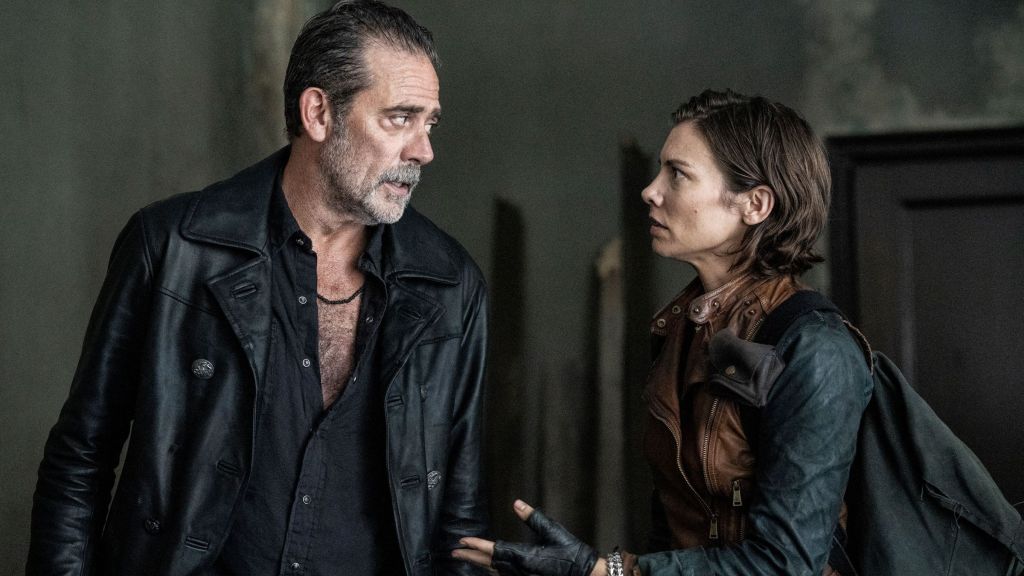
The franchise has evolved and Hoffman’s return was encouraged by his identification of what makes The Walking Dead: Dead City different from his original run, hope. Because the landscape of the walker apocalypse has evolved so much since those harrowing early exploits, the show no longer has to rely exclusively on unyielding despair. Instead, Seth’s return as showrunner leverages a deliberate justification for real hope in the ruins of Manhattan.
With Negan navigating a seemingly continuous, complex redemption arc, Maggie challenging her past trauma to lay the foundations for a thriving society and a new generation coming-of-age without ever knowing a time before the Walkers, The Walking Dead spin-off trades despair for a hard-fought sense of hope for both the characters and viewers. It seems the team at Walking Dead Universe is also carrying that hope, as they also revealed in our interview that they’re hoping The Walking Dead: Dead City shambles its way into a season 4.